

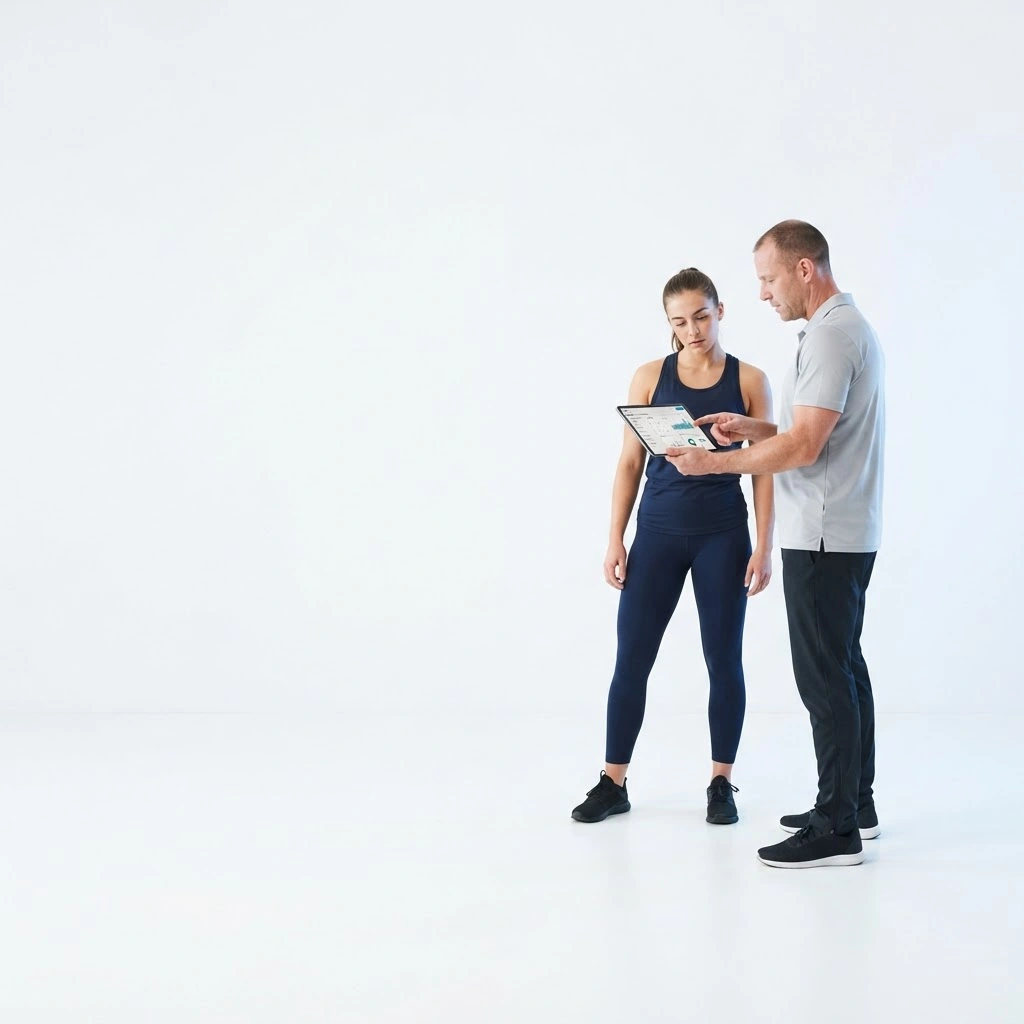


How to Build Unshakable Athletic Confidence Before Competition
Athletic confidence is not something you magically feel on game day. It is something you build, rehearse, and prove to yourself long before the whistle, weigh-in, or first lift. The athletes who look calm under pressure usually are not fearless; they are prepared in ways that make pressure feel familiar.
If you want reliable confidence before competition, think less about motivation and more about self-efficacy: your belief that you can execute the specific actions required in the moment. That idea comes straight from sports psychology and from Bandura’s work on performance belief. In practice, it means confidence grows when athletes collect evidence, repeat quality reps under realistic stress, and use routines that control attention and arousal. This article breaks down exactly how to do that. You will get practical protocols for building athletic confidence, regulating pre-event nerves, using imagery and self-talk, and recovering fast from mistakes. If you are an athlete, coach, or client, the goal is simple: turn psychology into better decisions and better execution when competition starts.
The Science of Athletic Confidence and Self-Efficacy
Confidence is built from evidence, not hype
In sports psychology, confidence is strongest when it is specific. An athlete may feel highly confident in deadlifting an opener, moderately confident in staying composed after a bad referee call, and not confident at all in executing a new skill under fatigue. That is why self-efficacy matters more than vague positivity. It is task-specific, and task-specific belief predicts persistence, emotional control, and performance quality better than generic “I got this” talk.
Bandura described four major sources of self-efficacy, but mastery experiences are the most powerful. In plain language, your brain trusts proof. Clean reps, successful adjustments, and repeated success under realistic pressure conditions create that proof. Coaches should stop asking, “How do we pump confidence up?” and start asking, “What evidence did today’s session give the athlete?”
Research in sport consistently shows that athletes perform better when they believe they can execute the required skill, especially when that belief is built from repeated successful practice and not empty encouragement.
How your body sensations shape performance belief
Many athletes misread adrenaline as danger. A racing heart, sweaty hands, or a tight stomach can be interpreted as “I’m not ready,” when the body is often just preparing to perform. One of the fastest ways to improve athletic confidence is to relabel these sensations as activation rather than threat. The goal is not to feel nothing; the goal is to feel ready.
This matters because interpretation changes behavior. An athlete who sees nerves as useful tends to stay aggressive, focus outward, and trust trained mechanics. An athlete who sees nerves as proof of weakness tends to over-control technique, hesitate, and search for reassurance. Confidence, then, is partly a skill of interpretation: teaching the brain that pressure sensations are normal and workable.
Build Athletic Confidence in Training, Not in the Locker Room

Create mastery reps with pressure, not just volume
The best confidence plan is a training plan that gives you controlled wins. Use a simple structure: 70 to 85% of usual competition intensity for skill quality, then finish with 1 to 3 pressure reps or rounds where the outcome matters. For a lifter, that could be one paused opener after standard warm-ups. For a team-sport athlete, it could be 3 sets of 3 game-speed actions after fatigue with a pass-fail standard.
Pressure training should be specific and limited. Too much pressure in practice can create fear; too little creates false confidence. Use one constraint at a time: a countdown, public scoring, a consequence for errors, or a narrowed technical target. If your physical preparation is inconsistent, confidence will be too, so build better evidence with progressive overload for strength and hypertrophy and protect those gains by improving recovery between workouts.
Keep a confidence ledger after every key session
Elite athletes often remember misses more vividly than wins. A confidence ledger fixes that bias. After each important session, spend 3 minutes writing down: one objective win, one skill that held up under stress, one adjustment for next time, and a confidence rating from 1 to 10. Over 4 weeks, patterns become obvious and your self-efficacy becomes anchored to data.
Use this exact post-training template:
- Win: one measurable success, like 5 of 6 first serves in target zone
- Held up: one behavior that stayed stable under pressure
- Fix: one technical or tactical adjustment
- Next cue: one short phrase for the next session
- Confidence score: rate current readiness from 1-10
Over time, this becomes a personal proof file. It also pairs well with process goals that actually stick, because process goals create more controllable wins than outcome goals alone.
Use Sports Psychology Tools That Transfer to Competition
Run a 10-minute imagery protocol, 4 to 5 days per week
Imagery works best when it is vivid, specific, and linked to the exact decisions you must make in competition. Set a timer for 10 minutes. Spend 2 minutes slowing your breathing, 5 minutes visualizing 3 perfect reps or sequences from a first-person view, 2 minutes imagining one adversity scenario, and 1 minute visualizing a calm recovery.
The adversity part is the hack most athletes skip. Do not only imagine success. Imagine a shaky warm-up, a loud crowd, a bad call, or a missed first attempt, then see yourself resetting and executing the next action correctly. That builds self-efficacy because you are rehearsing competence under imperfection, which is what real competition looks like.
Meta-analyses in sports psychology report small-to-moderate performance benefits from imagery, particularly when the script matches the athlete’s task, pace, emotions, and environment.
Use cue-word self-talk instead of motivational speeches
Self-talk improves performance when it is brief, relevant, and actionable. A useful script has three parts: instructional cue, calming cue, and identity cue. Example for a sprinter: “Push,” “Smooth,” “Attack.” Example for a powerlifter: “Brace,” “Drive,” “Finish.” Rehearse these cues during normal training, not just before big events.
Build one if-then line for pressure: “If I feel rushed, then I exhale, lock on my cue, and commit to the first movement.” This is far more effective than trying to think positively in the abstract. Coaches can model this by giving athletes one external cue and one effort cue, instead of overloading them with five technical corrections right before competition.
Design a Pre-Competition Routine That Reduces Uncertainty
The 24-hour plan: confidence loves predictability
Pre-competition anxiety spikes when athletes face too many unknowns. A simple 24-hour plan reduces decision fatigue and protects confidence. The night before, confirm logistics, equipment, timing, and food. Aim for 7.5 to 9 hours in bed, knowing perfect sleep is not required for good performance. Confidence improves when the athlete feels organized, not when the athlete chases a perfect feeling.
Use this competition-eve checklist:
- Pack all equipment and backups 12 hours early
- Review one-page game plan for 5 minutes, not 50
- Eat familiar meals and hydrate normally
- If using caffeine, stick to your tested dose, often 2 to 3 mg/kg about 45 to 60 minutes pre-event
- No new supplements, no last-minute technical experiments
Nutrition mistakes often get mislabeled as confidence problems. If you want steadier energy and a calmer mind, tighten your basics with fueling for performance before training.
The 10-minute lock-in routine before the start
Your pre-start routine should be short enough to repeat and strong enough to anchor focus. A practical sequence is: 2 minutes breathing, 2 minutes movement prep, 2 minutes cue-based imagery, 2 minutes rhythm drills, and 2 minutes silent focus. Keep the order the same each time so the routine becomes a trigger for performance readiness.
What matters most is consistency. The routine tells your nervous system, “We have been here before.” That familiarity is powerful for athletic confidence. Athletes in skill and precision sports often benefit from slightly longer exhalations before execution, while collision and power athletes may use a faster, more energizing rhythm. Either way, finish with one clear intention, not a crowded mind.
Control Arousal Without Losing Aggression
Breathing protocols for precision and power
Breathing is one of the fastest legal performance interventions available. For athletes who need precision, try 5 cycles of a 4-second inhale and 6- to 8-second exhale. For athletes who need force without panic, use 3 cycles of a 3-second inhale, 2-second hold, and 6-second exhale, then transition into dynamic movement. The long exhale helps reduce unnecessary tension without making you flat.
Use the protocol early, not at the point of panic. If you wait until you are already spiraling, the effect is weaker. Good competitors treat breathing like a warm-up variable, not an emergency fix. Done properly, it improves attentional control, lowers excess muscle tension, and helps you interpret activation as usable energy instead of impending failure.
External focus beats internal overthinking
Under pressure, athletes often become too internally focused: elbow position, foot angle, breathing pattern, what the coach said, what the crowd thinks. That overload slows reaction and disrupts automatic skill. In most situations, one external cue works better. Think “hit through the target,” “drive the floor away,” or “snap to the line.”
This does not mean technique stops mattering. It means the competition environment is usually the wrong place for fine-grained mechanics. Save deep technical analysis for training. In competition, use one movement cue, one effort cue, and one tactical priority. That narrower attentional window is a core sports psychology strategy for preserving confidence under stress.
Recover Fast After Mistakes and Bad Starts
Use the 15-second reset after any error
Confidence is not about never wobbling. It is about returning to task quickly. After a mistake, run a 15-second reset: one long exhale, one neutral label, one cue, then eyes back to the next action. Example: exhale, “Too quick,” cue “Smooth,” then reset your stance. This prevents one error from becoming a narrative.
Coaches should reinforce the reset, not the emotion. Asking, “Are you okay?” can accidentally trap the athlete in self-monitoring. Better prompts are: “What is the cue?” “What is next?” or “One adjustment.” The reset should be practiced in training after deliberate disruptions so the athlete is not learning it for the first time in competition.
Review performance honestly without attacking identity
Post-event reflection should separate result, execution, and identity. A poor result does not automatically mean poor preparation, and a strong result does not prove the process was sharp. Ask three questions: What was the outcome? What actually happened behaviorally? What is the next controllable change? This protects self-efficacy because it keeps feedback useful.
If your reviews are emotional and vague, confidence becomes unstable. Create a 24-hour rule: no dramatic conclusions the same day, then review video or notes with structure. For more applied mental skill ideas, see mental performance routines for athletes. The goal is not to feel great after every event; it is to leave every event with a better plan.
FAQ: Athletic Confidence, Self-Efficacy, and Sports Psychology
Can you build confidence if you still feel nervous?
Yes. Nervousness and confidence are not opposites. Many high performers feel both at once. The key is whether the athlete believes they can execute despite those sensations. That is exactly where self-efficacy matters.
Use nervousness as a cue to start your routine, not as proof that something is wrong. If the body is activated and the plan is clear, you can compete very well while still feeling butterflies.
How long does it take to improve self-efficacy?
Some athletes feel a difference within 1 to 2 weeks when they start using structured practice pressure, a confidence ledger, and a repeatable pre-performance routine. More durable changes usually show up over 4 to 8 weeks because the brain needs repeated evidence.
The fastest route is frequent, successful rehearsal of the exact competitive tasks that matter most. Confidence built on specific proof lasts longer than confidence built on hype.
Should coaches use hype to build athletic confidence?
Short-term energy can help, but hype alone is unreliable. It often works only when things are already going well. When an athlete struggles, pure encouragement without useful cues can feel hollow and may even reduce trust.
Better coaching is evidence-based: remind the athlete what has already been done, what cue matters now, and what the next action is. Confidence grows when communication points to proof and action.
What if confidence disappears after one bad competition?
That usually means confidence was attached too heavily to outcome. Rebuild by returning to controllable performance markers in training: quality reps, pressure sets, decision accuracy, and reset speed after errors.
Do not try to “win confidence back” only with another competition. First restore it in practice, where you can control the dosage, difficulty, and success rate. Then re-expose the athlete to competition demands gradually.
Conclusion
Athletic confidence is not blind belief, and it is not a personality trait reserved for naturally fearless people. It is trained self-efficacy: belief earned through specific preparation, pressure-tested reps, clear routines, and honest review. The most effective sports psychology tools are not flashy. They are repeatable systems that help you interpret nerves correctly, focus on the right cues, and recover fast when things get messy.
If you want better competition-day performance, start building confidence where it actually grows: in training, in recovery, and in the decisions you repeat every week. Use the protocols in this article for the next 4 weeks, track what changes, and refine from there. For more evidence-based coaching insights, mindset strategies, and performance systems, visit ElitePTS articles and keep turning science into results that show up when it counts.