

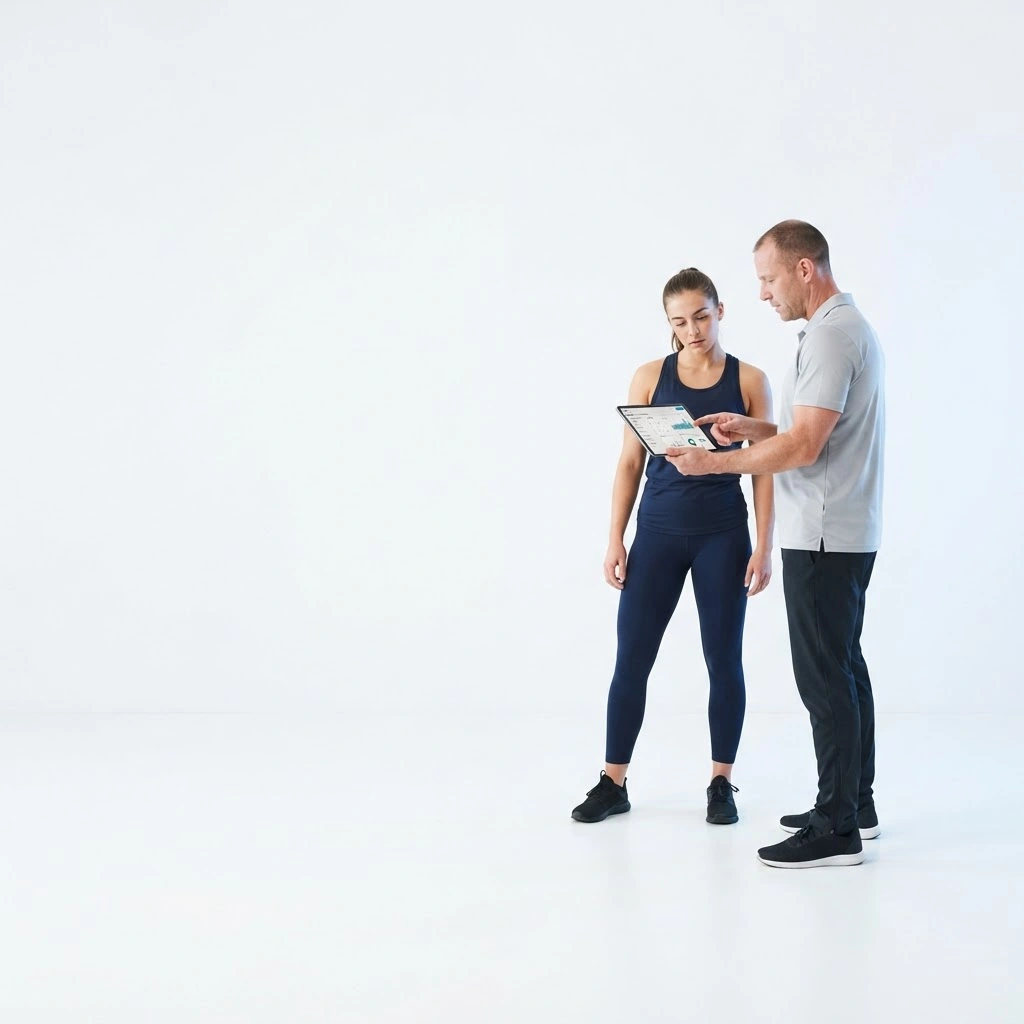


Fix Your Posture with These Daily Mobility Moves
If you want to improve posture, stop trying to "sit up straight" for 12 hours a day. Better posture usually comes from better mobility exercises, smarter breathing, and enough strength to own the positions your body can reach.
Here is the big idea: posture is not one perfect shape. It is your ability to move easily, stack your rib cage over your pelvis, and tolerate training, work, and daily life without building unnecessary tension. That matters for athletes chasing cleaner squats and presses, clients trying to reduce stiffness after long desk hours, and coaches who want movement fixes that actually transfer.
This guide focuses on the highest-return levers for spinal health: thoracic extension and rotation, hip extension and rotation, shoulder upward rotation, and neck positioning that does not rely on brute-force tension. If your recovery plan is weak, combine this routine with active recovery for athletes and a better warm-up for strength training. Also remember that mobility sticks better when recovery is handled, so review sleep and recovery habits if you feel stiff no matter what you stretch.
Elite takeaway: Research consistently shows that pain and posture are not explained by one static position alone. The bigger drivers are movement variety, tissue capacity, training load, and how long you stay still between bouts of movement.
Why Most People Fail to Improve Posture
Posture is a skill, not a single perfect position
A growing body of musculoskeletal research shows that there is no universal “perfect posture” that guarantees you stay pain-free. People can stand differently and still be healthy. What usually matters more is whether you can access multiple positions, whether your muscles have enough endurance, and whether your joints move where they should during walking, lifting, and reaching.
That means your goal is not to lock yourself into military posture. Your goal is to own neutral, flexion, extension, rotation, and side-bending without one area getting overloaded. For most people, the trouble spots are the thoracic spine, hips, rib cage, and shoulders. When those areas lose options, the neck and low back often compensate.
Mobility creates options; strength keeps them
Mobility exercises work best when you think of them as a way to unlock range you can then reinforce with active control. If you stretch a hip flexor for 60 seconds but never teach the glute to hold extension, your body will often drift back to the same pattern by the next workday or training session.
The practical rule is simple: spend a little less time chasing passive stretch sensation and a little more time on drills that mix breathing, joint motion, and muscular control. That is one reason short daily sessions beat one aggressive weekend stretch marathon. Frequent exposure teaches your nervous system that the new position is safe and useful.
Quick Screens to Find Your Mobility Bottleneck
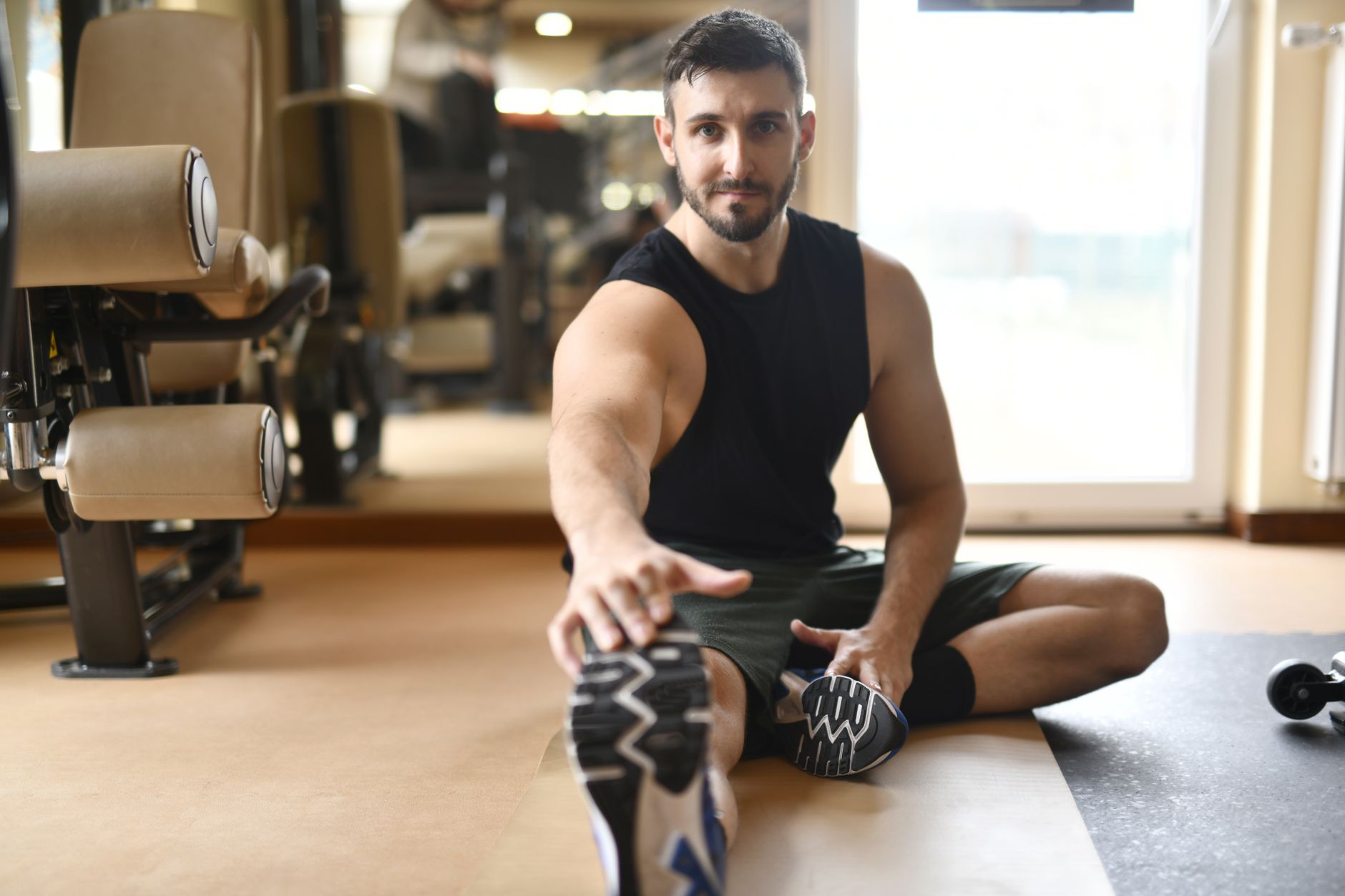
The wall reach test for thoracic spine and shoulders
Stand with your back and head lightly against a wall, ribs down, and feet about 15 cm from the wall. Raise both arms overhead without arching your lower back. If your arms cannot get near the wall, or your ribs flare hard to compensate, you likely need work in thoracic extension, shoulder flexion, or rib-cage control.
This test matters because limited overhead motion often shows up as neck tightness, shruggy pressing, and cranky shoulders. Retest after the drills later in this article. If your overhead reach improves immediately, you found a high-value target. Coaches can use this as a fast before-and-after screen in less than one minute.
The squat and hip rotation check
Next, use a bodyweight squat and a seated hip rotation check. In the squat, watch whether your heels stay down, knees track cleanly, and torso stays relatively upright without your low back rounding early. Then sit on a bench with hips and knees at 90 degrees and rotate each lower leg inward and outward to compare hip internal and external rotation side to side.
Restricted hip rotation or poor hip extension does not automatically mean injury, but it often forces the pelvis and lumbar spine to do extra work. That can make posture feel “collapsed” or “arched” depending on the compensation. If your squat improves after hip mobility work, your posture issue may be coming from below, not from the upper back.
Thoracic Spine Mobility Exercises to Improve Posture and Spinal Health
Quadruped T-spine rotations
Start on all fours. Place one hand behind your head, exhale fully, and rotate your elbow toward the opposite wrist. Then rotate up toward the ceiling without shifting your hips. Perform 2 to 3 sets of 6 to 8 reps per side, moving slowly and pausing for one second at each end range.
This drill improves thoracic rotation while teaching the lumbar spine to stay relatively quiet. That matters for lifters who overextend in pressing and for desk workers who feel all movement in the neck. The hack: breathe out hard on the way down to lock the rib cage, then inhale into your upper back on the way up to earn more motion where you actually need it.
Foam roller or bench thoracic extensions
Set a foam roller across your upper back or place elbows on a bench with hands together. Keep your ribs tucked and let your chest extend over the support. Use 2 sets of 5 to 6 slow reps or 3 holds of 20 to 30 seconds. You should feel motion in the upper back, not a huge low-back arch.
Thoracic extension can improve overhead mechanics and reduce the need for compensation at the shoulder and neck. If you use a roller often, keep expectations realistic. It can reduce tone and help you access range, but lasting change comes from active control after the drill. For more on that, see foam rolling benefits and myths.
Hip Mobility Exercises That Improve Posture from the Ground Up
Half-kneeling hip flexor stretch with glute squeeze and reach
Set up in a half-kneeling lunge with the back knee padded. Tuck the pelvis slightly, squeeze the glute on the kneeling side, and reach the same-side arm overhead. Hold 30 to 45 seconds for 2 to 3 rounds per side. If you only feel front-of-hip pinching, reset and reduce the range.
This is more effective than a loose lunge stretch because the glute activation helps lock the pelvis while the reach opens the front line from hip to rib cage. That combination is useful for people who sit for hours and then try to stand tall by over-arching the lower back. The goal is stacked posture, not an exaggerated chest-up posture.
90/90 hip switches and adductor rock-backs
For 90/90 switches, sit with both knees bent at 90 degrees and rotate side to side under control. Do 2 sets of 6 to 10 switches. Then move into adductor rock-backs on all fours with one leg extended to the side, rocking back for 8 to 10 reps per side. Keep the spine long and movement smooth.
These drills target hip internal rotation, external rotation, and adductor length without cranking the low back. That matters because rotational hip loss often shows up as knees collapsing, feet spinning out, or pelvis shifting during squats and gait. Better hip motion gives your pelvis more options, which helps the spine stop doing every job itself.
Shoulder and Neck Mobility Exercises for Better Alignment
Wall slides with lift-off
Stand with forearms on a wall, ribs down, and chin tucked slightly. Slide the arms upward while keeping light pressure through the forearms, then gently lift the wrists off the wall at the top if you can. Perform 2 to 3 sets of 6 to 8 reps with a full exhale on each rep.
This drill trains upward rotation of the scapula, serratus anterior function, and shoulder flexion without the usual shrug-and-arch compensation. It is especially useful if your “bad posture” is really a mix of stiff lats, limited thoracic extension, and poor rib control. Clinical exercise studies on neck and shoulder pain repeatedly show that scapular-focused work can be a high-return intervention.
Chin tucks and 90/90 breathing
Lie on your back with hips and knees at 90 degrees, feet on a wall or bench. Gently tuck the chin as if making a small double chin, then exhale through the mouth for 5 to 6 seconds. Inhale through the nose into the sides and back of the rib cage. Complete 5 breaths for 2 to 3 rounds.
Deep neck flexor training is supported in the rehab literature for people with forward-head posture and neck discomfort. Pairing it with breathing is the hack many people miss: if the rib cage stays flared and the upper traps stay on, the neck never gets to relax. For a deeper recovery angle, review breathing for performance and recovery and stress management for performance.
Your 10-Minute Daily Routine to Improve Posture
The exact sequence, dosage, and timing
If you want consistency, keep the routine brutally simple. Do it once daily, ideally after long sitting, before lifting, or as a reset in the evening. One round takes about 10 minutes; two rounds on high-stiffness days take about 18 to 20 minutes and are usually enough.
Use this sequence for 2 weeks before changing anything. Retest your wall reach or squat after each session so you know which drill gives the biggest payoff.
- 90/90 breathing with chin tuck: 5 breaths x 2 rounds
- Quadruped T-spine rotations: 6 to 8 reps per side x 2 sets
- Bench or foam roller thoracic extensions: 5 reps x 2 sets
- Half-kneeling hip flexor stretch with reach: 30 to 45 seconds per side x 2
- 90/90 hip switches: 6 to 10 reps x 2 sets
- Wall slides with lift-off: 6 to 8 reps x 2 sets
Programming rules and elite hacks
Rule one: stop every drill 1 to 2 reps before compensation. If you feel the low back arch, the ribs flare, or the shoulders shrug, you are feeding the pattern you are trying to fix. Quality beats volume here. Rule two: breathe slowly enough that you can control the rib cage. Fast, shallow reps usually become junk reps.
Rule three: pair mobility with one strength exercise that uses the new range. After thoracic work, do a goblet squat or landmine press. After hip work, do split squats or RDLs. After wall slides, do a light carry or row. This “mobility plus reinforcement” approach is what turns short-term change into something that actually improves training positions and long-term spinal health.
Simple standard: Do the minimum dose you can repeat daily. Five great reps done six days per week usually beats 20 sloppy reps done once.
FAQ: Daily Mobility, Posture, and Recovery
How long does it take to notice better posture?
Many people notice an immediate change in overhead reach, neck tension, or standing comfort after one session, especially if thoracic stiffness or hip restriction is the main driver. Visible changes in how you naturally hold yourself usually take 2 to 6 weeks of consistent practice.
The key is not chasing soreness or giant stretch sensation. Track objective markers: wall reach, squat depth, ability to keep ribs stacked, and how often you feel the need to “force” good posture during the day.
Can mobility exercises alone improve posture?
They can help, but mobility alone is rarely enough. If the body does not have the strength or endurance to hold better positions, it returns to the old strategy under fatigue, stress, or load. That is why rows, split squats, carries, dead bugs, and pressing variations matter.
Think of mobility as the key that opens the door, and strength as the hinge that keeps it working. The best posture correction plans use both.
What if a drill causes pain?
Mild muscular effort, stretching, and temporary unfamiliarity are fine. Sharp pain, numbness, tingling, joint pinching, or symptoms that worsen for hours afterward are not. Reduce range, slow the movement, change the setup, or skip the drill and get assessed if symptoms persist.
If pain is specific and recurrent, do not keep collecting random internet stretches. Use screening, identify the motion you actually lack, and then build a plan around that limitation.
Is posture work useful if I already lift heavy?
Yes, especially if your lifts are strong but your movement options are narrow. Plenty of strong athletes still compensate through the lumbar spine, lose overhead range, or carry neck and hip stiffness that bleeds into technique and recovery.
The biggest benefit is often not looking more upright. It is moving with less friction, hitting cleaner positions sooner in the warm-up, and needing fewer compensations under fatigue.
Conclusion
If you want to improve posture, do not obsess over one perfect position. Build a body that can access extension, rotation, and stacked alignment without fighting itself. The highest-return daily mobility exercises are the ones that open the thoracic spine, free the hips, restore shoulder motion, and calm the neck through better breathing and rib-cage control.
Start with the 10-minute routine in this article for 14 straight days. Retest your wall reach, squat, and general stiffness, then keep the drills that produce the biggest change. That is the Elite Catalyst approach: identify the bottleneck, apply the minimum effective dose, and turn evidence into better training decisions. For more recovery and performance content, visit ElitePTS Articles and keep building durable movement, better lifts, and stronger spinal health from the ground up.