


Flow State: How to Find Your Training Groove
Great training is not just about effort. It is about hitting that rare zone where reps feel sharp, time disappears, and your body does exactly what your brain asks. That is flow state—and when you can create it on command, deep focus stops being luck and starts becoming a repeatable edge for athletic performance.
Most athletes think flow is accidental: some days you have it, some days you do not. The science says otherwise. Flow research, largely influenced by Mihaly Csikszentmihalyi, shows that people enter this state when challenge, skill, feedback, and attention line up. In training, that means your environment, warm-up, workout structure, arousal level, and coaching cues all matter. If one piece is off, the session feels noisy. If the pieces fit, execution becomes efficient and powerful. That is why elite athletes obsess over routines. They are not being superstitious; they are reducing friction. If you already use RPE and RIR to manage load, think of flow the same way: another evidence-based tool that improves decision-making and performance. Here is how to create it before, during, and after your hardest training sessions.
What Flow State Really Means for Athletic Performance
The challenge-skill match is the entry point
Flow tends to appear when the task is hard enough to demand full attention, but not so hard that it creates panic. In the gym, that usually means choosing loads and complexity that sit just above comfort, not far beyond capacity. A technically clean triple at 82 percent of 1RM is far more likely to create flow than a sloppy max-out you are not prepared to own.
For athletes and clients, this is the first practical rule: set the session so success is possible but not automatic. Use a target of RPE 7-9 for primary work, depending on the goal. Too easy and your mind wanders. Too hard and your brain shifts into self-protection, second-guessing, and overthinking.
Flow feels automatic, but it is built on structure
Flow is often described as effortless, yet it usually comes from good constraints. You know the goal of the set, the standard for execution, and the feedback you need. That clarity lets attention narrow. Instead of thinking about ten things at once, you are solving one problem with high precision.
That is why sport psych research consistently supports clear goals, immediate feedback, and strong attentional control. In practical terms, before a set you should know: the load, the rep target, the main technical cue, and what successful execution looks like. If you need a five-minute debate with yourself before every working set, you are not setting up flow; you are feeding distraction.
“Flow appears when challenge and skill are both high and well matched.” That simple principle remains one of the most useful takeaways from decades of flow research.
How to Build Deep Focus Before You Touch the First Working Set

Control the environment before you chase the feeling
Deep focus is easier when the environment asks less of your attention. Put your phone on airplane mode for the next 45-60 minutes. Keep one playlist, one bottle, one notebook, and one training plan. Decision fatigue is real, and every unnecessary choice steals bandwidth from execution.
Your setup should also match the session. For heavy strength work, choose a rack, bench, or platform where interruptions are minimal. For conditioning or hypertrophy circuits, set up the whole station before you begin. The hack is simple: remove every reason to break attention once the working block starts. If your breathing tends to run away early, practice breathing for performance before the session instead of trying to fix yourself between reps.
Regulate arousal so you are switched on, not fried
Flow is not the same as maximum hype. In fact, many athletes miss it because they come in too amped or too flat. Use a fast readiness check: energy from 1-10, motivation from 1-10, and stress from 1-10. If stress is high and focus is scattered, start with 10 slow breaths using a 4-second inhale and 6-second exhale. If you are flat, use faster movement prep and more aggressive music.
Caffeine can help, but dose matters. A smart range for most athletes is 2-3 mg/kg taken 45-60 minutes pre-workout. That is enough to boost alertness and reaction without pushing many people into jittery, over-aroused training. More is not always better. If your hands shake, your pacing gets chaotic, or you rush setup, you probably overshot the dose.
Exercise research commonly shows performance benefits from caffeine in the 2-6 mg/kg range, but lower doses often improve alertness with fewer side effects.
A 10-Minute Pre-Training Flow State Routine That Actually Works
Minutes 0-5: downshift noise and narrow attention
Start with a simple sequence you can repeat every session. Minute 1: review the main goal of the workout. Minute 2: box breathe or use 4-in, 6-out breathing for 6-10 breaths. Minutes 3-5: complete your first mobility or activation circuit. Keep it tight and relevant: for lower body, try 6 bodyweight squats, 8 adductor rocks per side, 10 glute bridge reps, and 20 seconds of ankle pulses per side.
The purpose is not to “feel crushed” by the warm-up. It is to reduce mental clutter while giving the body clear input. Many athletes warm up with random drills that spike fatigue and dilute intent. A better rule: no more than 3-4 mobility drills, all linked directly to the day’s first lift or running pattern.
Minutes 5-10: rehearse execution and create momentum
Now shift from general readiness to task-specific focus. Use 3-5 ramp-up sets for the first main movement. Example for a squat day aiming at 3 sets of 4 reps at 80 percent: empty bar x 8, 40 percent x 5, 55 percent x 4, 67 percent x 3, 75 percent x 1-2, then begin work. Rest just enough to stay crisp.
Pair each ramp-up set with one cue only. For example: “brace, sit between hips,” or “push the floor away.” Do not coach yourself with a paragraph. If you want a stronger habit system around this routine, use a simple pre-session checklist and stack it onto your arrival ritual, similar to the behavior methods discussed at Peak by ElitePTS on building better habits for training consistency.
- 1 minute: review the goal of the session
- 2 minutes: down-regulate or energize breathing
- 3 minutes: specific mobility and activation
- 4 minutes: ramp-up sets with one cue per set
How to Design Workouts That Invite Flow State
Choose movements and loads you can attack with intent
Flow loves clarity. If the day is built around six novelty exercises, three supersets, and constant setup changes, attention gets fragmented. Most athletes get better results when the first 20-30 minutes of the session are organized around 1 primary lift or skill and 1 closely related accessory. That creates repetition, rhythm, and visible feedback.
For strength, a useful template is 3-5 sets of 3-5 reps at 75-85 percent of 1RM on the main lift, then 3-4 sets of 6-8 reps on the key accessory. For hypertrophy, a flow-friendly structure is 3-4 sets of 6-12 reps with 60-120 seconds rest, keeping the exercise order stable for several weeks. Good programming matters here; if your phase jumps around randomly, review the principles in periodization for strength and hypertrophy.
Use rest periods to preserve rhythm, not kill momentum
Rest is not dead time. It is where you either keep the groove alive or let the session leak away. Time your rests. For heavy compound lifts, use 2-4 minutes. For hypertrophy work, 60-90 seconds often keeps enough pressure to maintain engagement. What breaks flow is the half-rest: too long to keep rhythm, too short to recover quality.
Also, avoid switching your attention source between every set. Do not lift, scroll, reply, check video, then reset emotionally. If you need technique feedback, record one or two key sets only. Athletes chasing flow should protect uninterrupted work blocks the way serious students protect deep work. The most productive sessions are boring in the best way: same goal, same rhythm, same high-quality output.
Common Flow Killers and the Fastest Fixes
Going too heavy too early
One of the fastest ways to lose flow is letting ego set the first working weight. If your first real set turns into a grind, your attention shifts from task execution to threat management. Bar path gets ugly, breathing gets shallow, and confidence drops. The fix is simple: earn the heavier work with better ramp-up sets and a realistic opener.
A good rule is to make the first working set feel like proof, not a gamble. If the plan says 4 sets of 4, your first set should confirm you chose the right load. If it looks like an RPE 9.5 when you expected an 8, reduce 2.5-5 percent immediately. Flow grows when competence stays visible.
Too many cues, too much noise
Coaches often kill athletic performance with good intentions. More information is not better information. An athlete under a bar does not need five body-part instructions. They need one cue that changes the next rep. Research on attentional focus regularly shows that concise, relevant cues—often with an external focus—improve motor output better than constant internal chatter.
For clients training alone, the same principle applies. Pick one cue before the set and one performance metric after the set. That could be “drive the bar straight” before, and “all four reps moved evenly” after. If recovery is poor, attention will also suffer, so clean up the basics with better sleep and muscle recovery habits instead of assuming the problem is motivation.
How Coaches and Serious Lifters Can Create Flow More Consistently
Use one target, one cue, one feedback loop
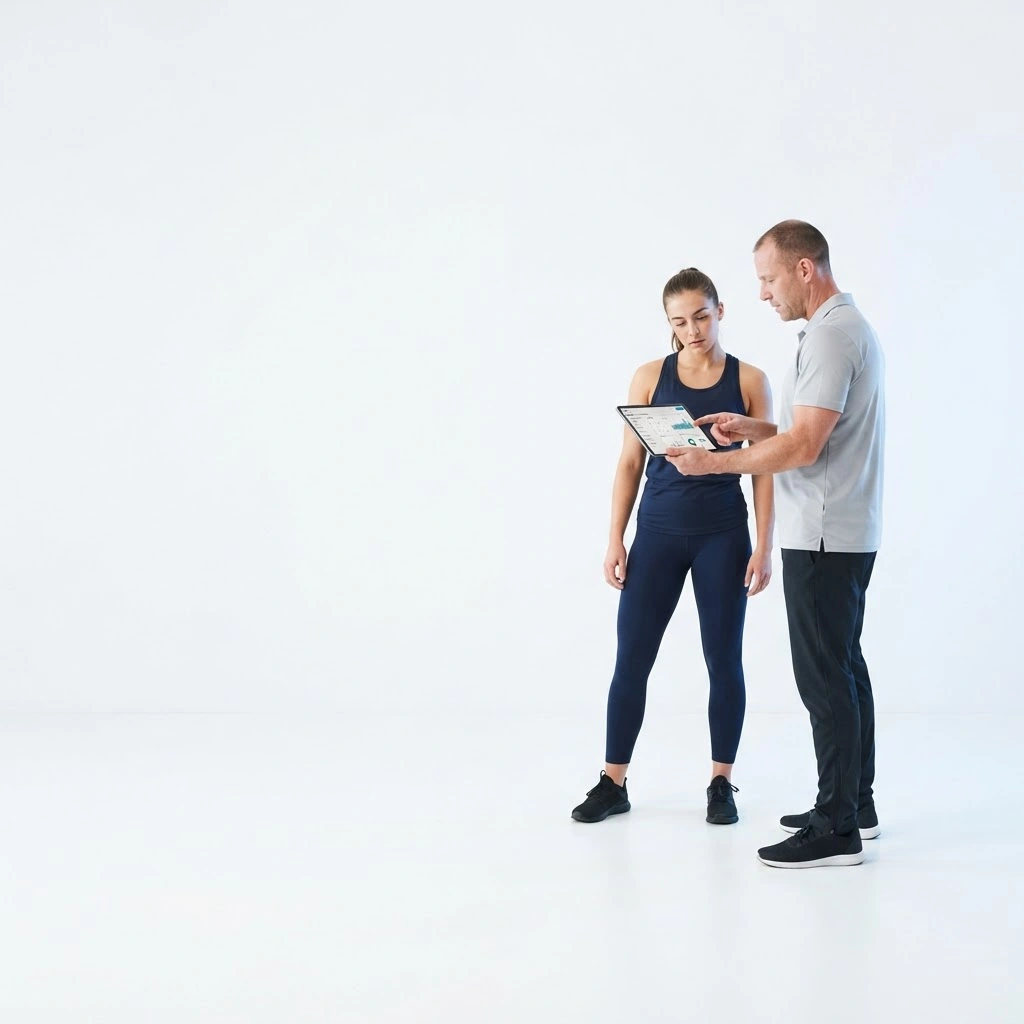
If you coach athletes, give them a narrow attentional channel. Start each main lift with one target outcome, such as “all reps under control with no balance shift.” Then give one technical cue, such as “push through mid-foot.” After the set, ask one feedback question: “Did that cue improve the rep?” That loop is clean, fast, and teachable.
This works especially well in team or semi-private settings where attention is expensive. Athletes do not need a speech; they need repeatable structure. Over time, the athlete internalizes the sequence and enters the set already organized. That is a huge competitive advantage because flow becomes a process, not a coincidence.
Review data after the block, not during every rep
Velocity, heart rate, splits, and video are useful, but constant monitoring can fragment attention. During the work block, let performance lead. After 2-3 sets, review the trend. Is speed dropping? Is technique stable? Is rest too short? Use the data to guide the next decision instead of interrupting the current one.
The same goes for lifestyle habits. Better recovery, predictable sleep, and simpler routines make flow easier to access because the nervous system becomes more stable session to session. For athletes juggling training and work, the recovery frameworks at Peak by ElitePTS for busy-athlete recovery strategies can help reduce the chaos that keeps focus inconsistent.
FAQ: Flow State, Deep Focus, and Training
Can beginners enter flow state, or is it only for advanced athletes?
Beginners can absolutely enter flow state. The challenge just has to match their current skill. For a new lifter, that might mean learning a goblet squat with perfect tempo and posture, not chasing heavy barbells.
In fact, beginners often improve quickly when sessions are simple and feedback is immediate. Keep exercise selection tight, use small progressions, and make the goal of each set obvious.
Is music necessary for deep focus in the gym?
No. Music is a tool, not a requirement. Some athletes use it to raise arousal, while others perform better with less sensory input. Test both, rather than copying what looks intense on social media.
If you use music, keep it consistent for the session block. Constantly changing songs, skipping tracks, or checking your phone will usually hurt deep focus more than the playlist helps.
How long does flow state usually last during a workout?
Usually not the whole session. Most athletes experience flow in blocks of 10-30 minutes, especially around the main lift, sprint series, skill circuit, or conditioning piece that best matches the day.
Your goal is not to feel magical for 90 straight minutes. Your goal is to create several protected windows where attention, effort, and execution line up.
Does flow state help strength and hypertrophy, or only skill sports?
It helps both. In strength work, flow improves setup, timing, bar path, and confidence. In hypertrophy work, it improves effort quality, rep control, and consistency across sets.
Flow does not replace good programming, nutrition, or sleep. But it helps you express the training you have already earned, which is often the difference between a mediocre session and a productive one.
Conclusion: Make Flow State a Trainable Skill
Flow state is not magic, and it is not reserved for elite athletes on perfect days. It is a trainable performance skill built from simple pieces: the right challenge level, a controlled environment, a repeatable pre-lift routine, focused cues, and workout design that protects rhythm. Build those pieces and deep focus becomes more available. Build them consistently and your athletic performance becomes more repeatable under pressure.
If you want more evidence-based systems for better training decisions, visit ElitePTS articles for practical coaching, programming, and performance content built to create real gains. The goal of Elite Catalyst is simple: turn good intent into measurable results. Flow is one more way to do exactly that—on demand, in the gym, when it counts.