




Managing Tendonitis Through Targeted Mobility
Tendon pain rarely improves from complete rest alone. Smart mobility exercises, paired with the right loading dose, can reduce irritation, improve movement quality, and accelerate tendonitis recovery without detuning strength.
If you are dealing with a cranky Achilles, patellar tendon, elbow, or shoulder, the goal is not to stretch everything harder. The goal is to restore the specific joint motion that changes how force reaches the tendon, then reload the tissue progressively. That is how better tendon health is built in the real world. Research on tendinopathy consistently shows that load management, progressive strengthening, and pain-monitored exercise outperform passive treatment alone. Targeted mobility matters because stiff ankles, hips, thoracic spine, wrists, and shoulders often force the tendon to absorb stress it should not be handling by itself. For athletes, clients, and coaches, that means mobility is not a recovery add-on. It is a tool to improve mechanics, reduce repeated irritation, and keep training productive while symptoms settle.
Why targeted mobility works in tendonitis recovery
Tendon pain is usually a load problem, not just an inflammation problem
Many cases labeled tendonitis are better described as tendinopathy: a tendon that has lost some load tolerance after too much volume, too much intensity, poor recovery, or repeated exposure to bad positions. That distinction matters. If you treat every painful tendon as an inflamed tissue that only needs rest, you often create a weaker tendon that hurts again as soon as training resumes.
Targeted mobility helps because it changes the movement constraints around the tendon. Limited ankle dorsiflexion can overload the Achilles. Poor hip control and stiff quads can increase stress at the patellar tendon. Restricted thoracic extension and shoulder rotation can dump force into the biceps or rotator cuff. Mobility does not heal the tendon by magic; it improves the environment so your strengthening work lands where it should.
Better motion spreads force across the system
A healthy tendon likes load, but it likes load delivered through clean mechanics. When one joint is stiff, another area pays for it. A basketball athlete who cannot get the knee over the toe often compensates by collapsing at the arch or twisting through the knee during landing. A lifter with poor shoulder external rotation may flare the elbow and irritate the forearm extensors during pressing and pulling.
That is why mobility exercises should be specific, not random. You are looking for the missing motion that reduces compression, improves alignment, and lets the surrounding muscles share the workload. If you need a broader recovery framework, pair this approach with an active recovery plan for athletes so mobility, sleep, and training volume work together.
Key performance truth: Tendons respond best to a combination of load management, progressive resistance, and movement correction. Mobility is most useful when it directly improves the pattern that was feeding the pain.
Rules for mobility exercises during tendonitis recovery
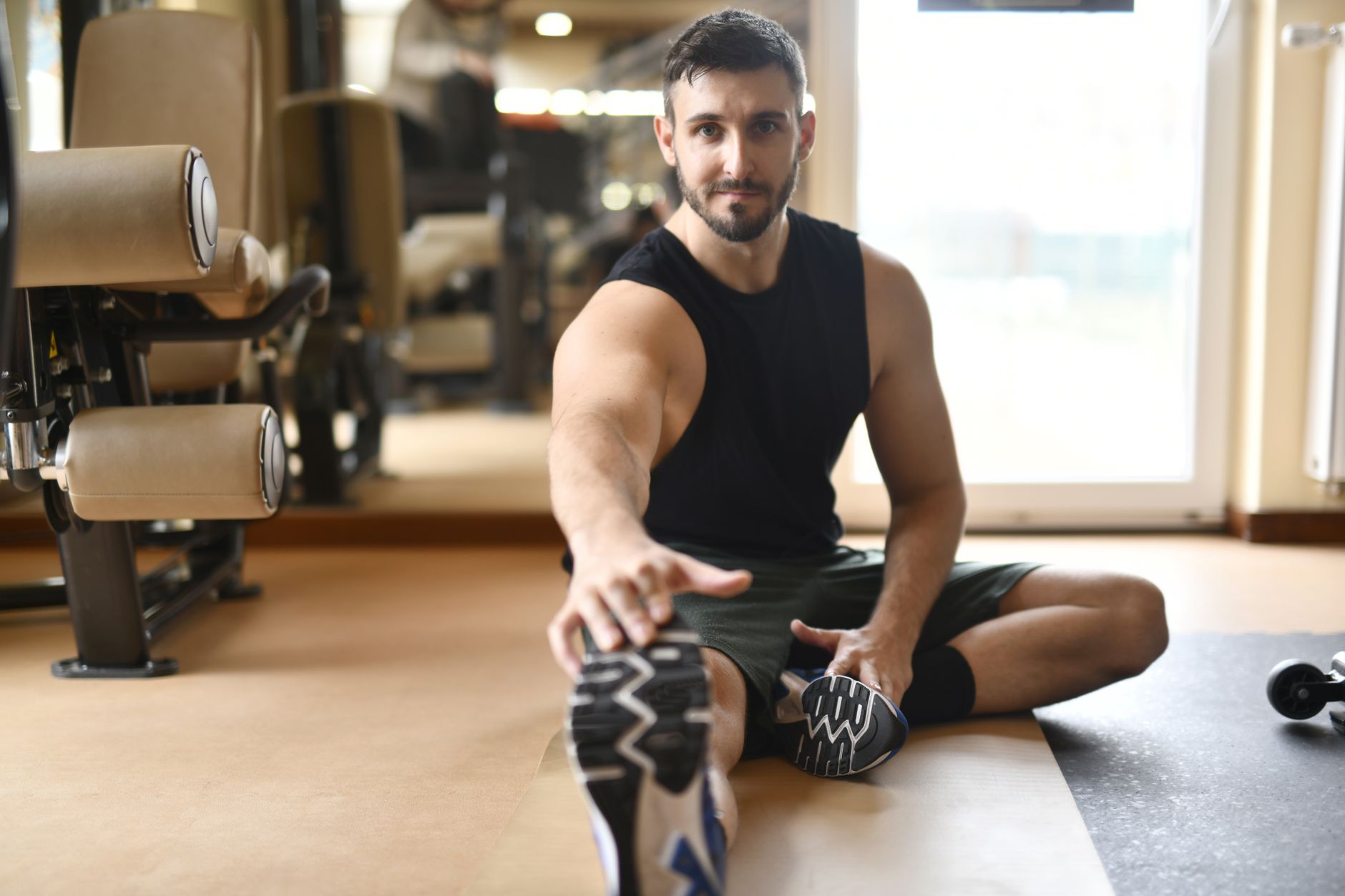
Use a pain-monitoring model instead of chasing zero discomfort
Tendon rehab is not the same as avoiding all sensation. In many clinical models, pain during exercise up to about 3 out of 10 is acceptable if it settles within 24 hours and does not worsen week to week. That gives athletes enough room to keep moving, keep loading, and avoid the deconditioning spiral that comes from being overly cautious.
Use this simple filter after every session: pain during exercise at 0 to 3 out of 10, no obvious limp or compensation, and symptoms back to baseline by the next day. If pain jumps to 5 or more, morning stiffness lasts longer, or performance drops, your dosage was too high. This is where coaches can separate useful discomfort from tissue aggravation instead of guessing.
Keep mobility targeted, slow, and low threat
For most irritated tendons, the best mobility work is 30 to 90 seconds per drill, performed for 2 to 4 rounds with controlled breathing and no aggressive bouncing. Use mobility before training to access cleaner ranges, between sets to reinforce them, or after training to reduce residual stiffness. Long passive stretching into pain is usually a poor trade when the tendon is already sensitive.
- Warm-up dose: 1 to 2 drills, 2 sets each, 6 to 10 reps or 30 to 45 seconds
- Recovery dose: 2 to 4 drills, 2 to 3 sets each, 45 to 60 seconds
- Frequency: 5 to 7 days per week for mobility, 2 to 4 days per week for heavier tendon loading
- Tempo: 3-second inhale, 4-second exhale, move slowly into end range
If you are unsure whether soreness is normal training fatigue or a sign you pushed too far, compare your symptoms against this guide on DOMS vs injury. That distinction prevents unnecessary deloads and avoids the bigger mistake of training through the wrong type of pain.
Mobility exercises for Achilles and patellar tendonitis recovery
Achilles tendon mobility: restore dorsiflexion without irritating the tendon
For Achilles issues, the target is usually better ankle motion, calf tissue glide, and foot control. Start with a knee-to-wall dorsiflexion drill: 2 to 3 sets of 8 slow reps per side, keeping the heel flat. Then add a band-assisted ankle mobilization for 60 seconds per side if available. Follow it with a bent-knee soleus stretch for 30 seconds and a short-foot hold for 3 sets of 20 seconds to build arch stability.
Once mobility improves, pair it with tendon loading. A reliable sequence is isometric calf raises at mid-range, 5 sets of 30 to 45 seconds, then progress to heavy slow calf raises on a step, 3 to 4 sets of 6 to 8 reps, 3 seconds up and 3 seconds down. If the insertional Achilles is irritated, avoid dropping too deep off the step early on because excessive compression can flare symptoms.
Patellar tendon mobility: free the ankle and hip so the knee is not doing everything
Patellar tendon pain often shows up in jumpers, lifters, and field athletes who live in high-force knee angles. A smart mobility block includes ankle dorsiflexion mobilizations, half-kneeling hip flexor stretches with glute squeeze, and adductor rock-backs. Use 2 sets of 8 reps for the moving drills and 30 to 45 seconds for holds. The goal is simple: improve ankle and hip contribution so landing and squatting forces distribute better.
After mobility, use a pain-relieving loading option such as a Spanish squat isometric, 5 sets of 30 to 45 seconds, then progress to decline squats or split squats for 3 to 4 sets of 6 to 10 reps. Research in patellar tendinopathy supports heavy slow resistance as an effective long-term strategy. Mobility prepares the pattern; strength restores the tendon's capacity to tolerate sport.
Practical benchmark: If your ankle dorsiflexion is clearly limited side to side or your heels rise early in squats, fixing that restriction often gives the patellar tendon immediate relief during training.
Upper-body mobility exercises for tendon health
Elbow tendon pain: improve wrist and forearm motion first
Lateral elbow pain and medial elbow pain are common in lifters, golfers, climbers, and desk-heavy clients. Start with the joints above and below the tendon. Use wrist extension mobility against a bench for 2 sets of 30 seconds, forearm pronation and supination with the elbow at 90 degrees for 2 sets of 8 slow reps, and gentle nerve glides if symptoms have a neural component. Then add scapular control drills like wall slides or band pull-aparts.
Load the tendon with intent. For lateral elbow symptoms, try isometric wrist extension holds for 5 sets of 30 seconds, then progress to eccentric wrist extension with a dumbbell, 3 sets of 12 to 15 reps. Many clients get temporary symptom relief from self-massage, but tissue tolerance improves more from progressive loading than from passive work alone. If you use manual techniques, keep them secondary to strength.
Shoulder tendon health: get thoracic extension and rotation back
Shoulder tendon irritation often tracks back to poor scapular mechanics, a stiff thoracic spine, or lost external rotation. A clean mobility sequence is foam roller thoracic extensions for 6 reps, side-lying open books for 8 reps per side, and a doorway pec stretch for 30 seconds. Then use a band external rotation mobilization or controlled articular rotations for the shoulder, 5 slow reps each.
Follow mobility with strength that teaches the shoulder to use the new range: isometric external rotation holds, bottom-up carries, and landmine presses are excellent starting points. Athletes with high pressing volume should also review program balance. More recovery tools can help, but they should support training, not replace it. For example, use foam rolling for recovery to reduce stiffness, then recheck whether overhead motion actually improved.
How to build a weekly tendonitis recovery plan
The best session order for most athletes
A simple order works well in practice: mobility, isometrics, main strength work, then optional accessory eccentrics. Mobility opens the pattern. Isometrics can reduce pain acutely and improve confidence. Heavier strength work builds the tendon's long-term capacity. Accessory work adds targeted volume without letting fatigue destroy mechanics.
Example lower-body session for Achilles or patellar symptoms: 6 minutes of targeted mobility, 5 sets of 30 to 45 second isometrics, 3 to 4 compound strength lifts in moderate ranges, then 2 accessory tendon exercises. Example upper-body session for elbow or shoulder symptoms: 5 minutes of mobility, 2 pain-relieving isometric drills, main pressing or pulling with adjusted volume, then isolated tendon loading at the end.
Progress weekly by response, not by ego
Use a 3-week wave. Week 1: conservative dose, RPE 6 to 7, symptoms stable within 24 hours. Week 2: add 5 to 10 percent load or 1 set to the tendon exercise. Week 3: maintain load and improve range or tempo quality. Week 4 can be a small deload if morning stiffness or session pain has been trending upward.
Track four numbers: pain during exercise, pain the next morning, stiffness duration, and performance on key lifts or jumps. That dashboard tells you more than pain alone. Coaches should also zoom out and manage total lower-body contacts, sprint volume, gripping volume, and sleep debt. Recovery is systemic. If sleep is poor, use these sleep recovery strategies for athletes to support tissue adaptation between sessions.
Mistakes that slow tendon health gains
Stretching harder than the tendon can tolerate
One of the biggest errors is turning mobility into a pain contest. Aggressive stretching into end-range dorsiflexion for insertional Achilles pain, deep knee-flexion compression for an irritated patellar tendon, or cranking the shoulder into unstable positions can increase symptoms without improving function. More range is only useful if you can control it and load it.
A better standard is this: every mobility drill should improve a testable movement within the same session. If ankle mobility does not improve squat depth, step-down quality, or walking mechanics, switch drills. If shoulder mobility does not improve reaching, pressing, or overhead comfort, you may be mobilizing the wrong area.
Doing random rehab without a measurable goal
Tendon rehab fails when there is no progression model. Band work, stretching, massage guns, and generic warm-ups feel productive, but they often become noise if no one tracks load tolerance. Your plan should answer three questions each week: what range am I restoring, what load am I building, and what sport or gym task am I returning to?
That is also why long-term resilience still depends on strength. Once pain settles, transition toward more robust lower- and upper-body patterns. This piece on strength training for injury prevention is a useful next step because stronger tissue with better movement options is the real end game, not just lower pain scores.
FAQ on tendonitis recovery and mobility exercises
Can mobility exercises alone fix tendonitis recovery?
Usually not. Mobility can reduce the mechanical drivers of pain, but tendons still need progressive loading to rebuild capacity. Think of mobility as improving access to better positions, not as the only treatment.
The best results come from combining targeted mobility, pain-monitored isometrics, and strength progressions over several weeks.
How often should I do mobility exercises for tendon health?
Most athletes tolerate targeted mobility daily because the tissue stress is low. Use short doses of 5 to 10 minutes, especially before training or after long periods of sitting.
Heavier tendon loading is different. Keep those sessions to about 2 to 4 times per week depending on symptom response and total sport volume.
Should I stretch a painful tendon directly?
Sometimes, but not aggressively and not always early on. Insertional tendons in particular can dislike high compression at end range, so direct stretching may aggravate symptoms.
Start by restoring nearby joint motion first, then reintroduce tendon range gradually if it improves function and does not worsen pain the next day.
How long does tendonitis recovery usually take?
Mild cases can improve in a few weeks, but stubborn tendinopathy often needs 8 to 12 weeks of consistent loading and movement correction. High-performance athletes may keep training through part of that process with adjusted volume.
Speed depends on how long the tendon has been irritated, the sport demands, sleep, nutrition, and how precisely load is managed.
Conclusion
Tendonitis recovery improves fastest when mobility is targeted, measurable, and paired with progressive loading. Do not chase random stretching. Restore the missing joint motion that changes force distribution, keep pain within a smart range, and build strength that the tendon can actually use in sport and training. That is the combination that moves you from symptom management to durable tendon health.
If you are an athlete, coach, or client who wants a recovery plan that translates to better performance, Elite Catalyst is built for that mission. Explore more evidence-based recovery and performance content at ElitePTS Articles and apply the same standard to every decision: use science, track response, and keep only what creates real gains.