




The Mental Game: Building a Champion Mindset in Training
The athletes who separate themselves are rarely the most motivated every day. They are the ones with an athlete mindset strong enough to keep standards high when fatigue, doubt, and pressure show up. That is the real mental game: building mental toughness through training habits, not waiting for perfect emotion.
A champion mindset is not a personality trait reserved for Olympians or professionals. It is a trainable set of skills rooted in sports psychology: attention control, self-talk, emotional regulation, recovery discipline, and the ability to repeatedly execute under stress. Research on growth mindset, self-determination theory, and psychological skills training shows that performance improves when athletes practice mental skills with the same consistency they bring to strength work, conditioning, and technique. In other words, confidence is not magic; it is evidence your preparation has become repeatable.
If you want better training sessions, more stable motivation, and more poise in competition, the answer is not hype. It is a system. The same planning principles behind periodization for athletes apply to the brain: expose yourself to stress, recover well, reflect honestly, and progressively raise the demand.
What an Athlete Mindset Really Means
Identity drives behavior under fatigue
An elite athlete mindset starts with identity. When athletes see themselves as people who execute standards, they make better decisions when tired, frustrated, or behind schedule. That identity shapes small choices: finishing the last rep with intent, fueling after training, or getting to bed instead of scrolling.
This matters because pressure narrows attention. In hard moments, you do not suddenly invent discipline; you default to your practiced identity. A sprinter who believes, 'I am someone who resets quickly,' responds to a bad start differently than one who thinks, 'I always choke.' The first athlete protects performance by protecting identity.
Growth mindset beats ego protection
Carol Dweck's work on growth mindset remains useful in sport because it shifts the meaning of struggle. A hard session does not prove you are limited; it reveals where adaptation must happen. Athletes with a learning orientation review mistakes faster, seek feedback more often, and persist longer when progress is not linear.
“Becoming is better than being.” — Carol Dweck
That quote fits training perfectly. A champion mindset does not need every session to feel great. It needs each session to provide information. The actionable rule is simple: rate sessions by quality of execution, not just the result. This is the same long-view thinking that makes tracking training load valuable; good athletes judge trends, not isolated bad days.
How Mental Toughness Is Actually Built
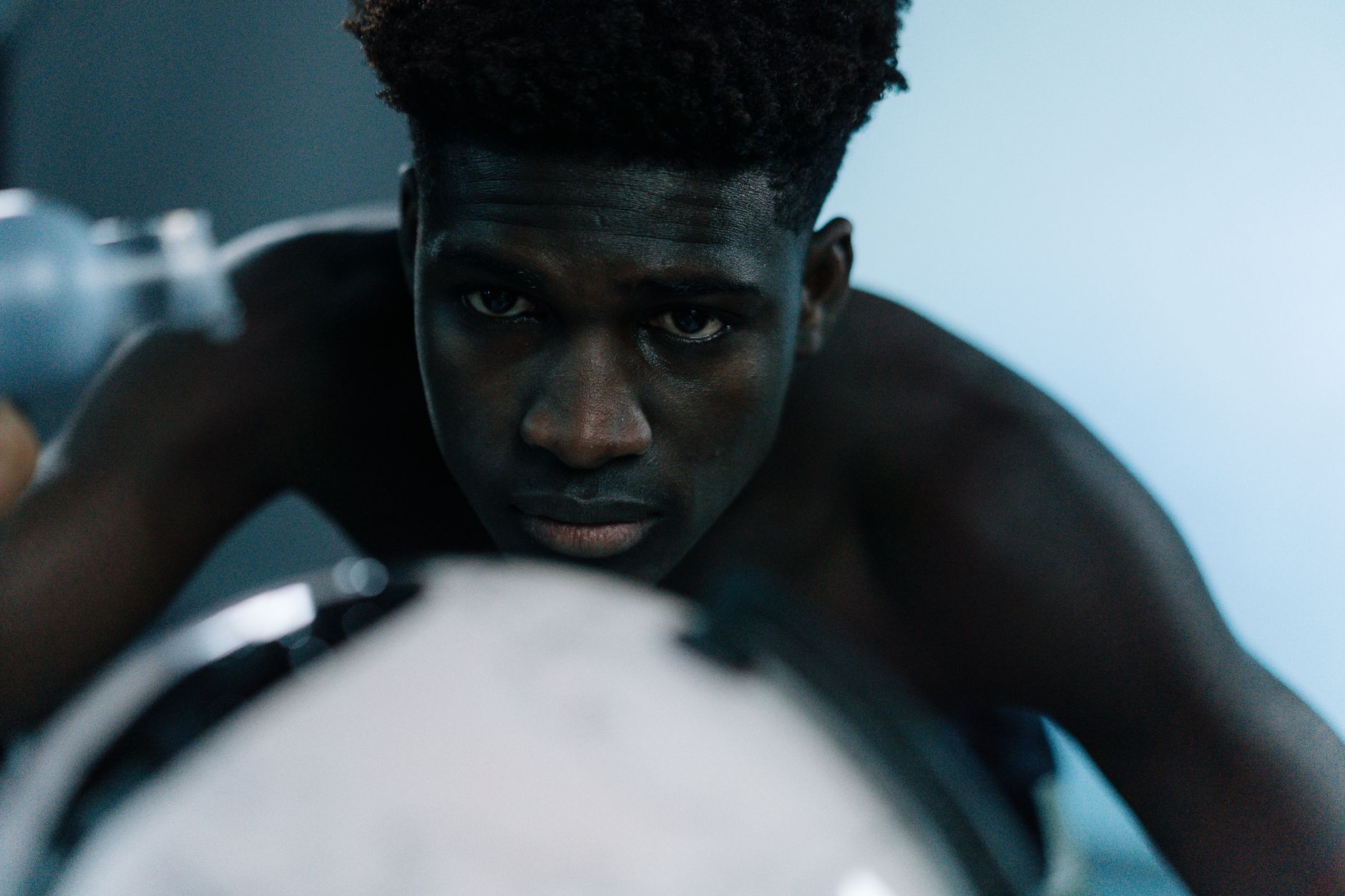
Stress inoculation belongs in training
Mental toughness is not built by shouting slogans. It is built by controlled exposure to challenge. In sports psychology, this is often framed as stress inoculation: gradually practicing under realistic pressure so the nervous system learns that discomfort is manageable. Think timed finishers, score-based drills, limited-rest intervals, or technical work after fatigue.
The key is dosage. Too little stress and nothing adapts; too much and technique collapses. The best coaches create challenge while preserving intent. A midfielder may finish conditioning with a decision-making drill. A power athlete may practice pre-lift focus after missed attempts. The point is to rehearse performance when emotion rises.
Process goals create resilience
Outcome goals matter, but they are weak daily guides. 'Make nationals' or 'add 20 pounds to my squat' can inspire effort, yet those goals do not tell you what to do today. Process goals do. Examples include: three quality cues per set, six hours between training and bed, or one reset breath before every start.
Research across performance psychology consistently shows that specific, controllable goals improve adherence and attention. Try this weekly protocol:
- 1 outcome goal: the result you want this block
- 3 process goals: behaviors you can measure daily
- 1 pressure goal: a mental skill to train under fatigue
That structure turns mental toughness from a vague trait into a repeatable practice.
Sports Psychology Tools That Improve Training Quality
Self-talk shapes effort and attention
Self-talk is one of the simplest and most underrated tools in sports psychology. The brain is always giving instructions; the difference is whether those instructions are useful. Negative loops like 'do not miss' or 'I am dead' pull attention toward threat. Performance cues like 'drive the knee,' 'fast hands,' or 'one more clean rep' direct attention toward action.
Meta-analytic research in sport and exercise psychology has found that structured self-talk can improve both motor execution and endurance performance. The mechanism is straightforward: cue words reduce cognitive noise and help athletes access learned patterns faster. Keep it short, specific, and practiced before you need it.
Visualization and routines reduce chaos
Mental imagery works best when it is vivid, brief, and linked to real rehearsal. Michael Phelps famously used visualization to pre-live races and potential problems. That is the lesson: do not just imagine success; imagine disruptions and your response. Picture the false step, the missed lift, the heavy legs on lap three, then see yourself resetting.
Pair imagery with a pre-performance routine. For example: one deep breath, one technical cue, one aggressive action word. Athletes who use consistent routines conserve attention and arrive at execution faster. If your technique or decision-making needs sharpening too, study proven coaching principles through ElitePTS coaching resources and then integrate the same cues into your mental routine.
Motivation Is Unreliable, Systems Win
Build intrinsic motivation, not emotional dependency
Motivation rises and falls with sleep, results, stress, and life load. That is normal. Self-determination theory suggests athletes stay more engaged when training supports autonomy, competence, and connection. In plain language: you are more consistent when you understand the purpose, feel progress, and train within a meaningful environment.
So stop expecting to feel fired up every session. Instead, create reasons deeper than mood: mastery of your craft, loyalty to your team, or commitment to the version of yourself you are building. Emotional intensity can help, but reliable consistency comes from values plus structure.
Use habit design to protect standards
Champion habits remove negotiation. Pack your bag the night before. Set training times that survive work and family demands. Pre-log post-workout nutrition. Keep your first five minutes in the gym identical every day. These are not trivial details; they reduce decision fatigue and protect energy for hard work.
Support the system with your environment. If fueling is inconsistent, make it easier with a basic plan and resources on sports nutrition for performance. If fatigue is crushing training quality, examine weekly load instead of blaming willpower. When systems improve, motivation becomes a bonus rather than a requirement.
Performing Under Pressure Without Choking
Train pressure before competition forces it
Athletes often say they need to be more confident in competition, but confidence usually comes from exposure. If practice never includes consequence, pressure on game day feels unfamiliar. Add stakes: races to a target number, visible scoring, consequence-based relays, or one top set performed after waiting and watching, just like a meet.
The goal is not to create panic. It is to make arousal familiar. A useful standard is to simulate enough pressure that heart rate rises and thoughts speed up, while technique remains recoverable. Done consistently, this teaches the athlete that nerves are information, not danger.
Use a reset routine after mistakes
Most athletes do not lose performance because of one error. They lose it because one error becomes three. A reset routine interrupts that spiral. Use this three-step protocol: exhale, label, refocus. Example: long exhale, 'too rushed,' then one external cue such as 'drive through contact' or 'finish tall.'
Breathing matters here. A longer exhale can quickly downshift arousal and restore fine motor control. Many elite performers use some version of this, whether between pitches, before a free throw, or after a missed attempt. Pressure management is not about eliminating emotion; it is about recovering faster than the field.
Recovery, Reflection, and Long-Term Confidence
Recovery is mental training too
Fatigue changes psychology. Sleep loss raises perceived exertion, worsens reaction time, and makes emotional control harder. That means many so-called mindset problems are actually recovery problems in disguise. If you want steadier confidence and better decisions, treat sleep, nutrition, and low-intensity recovery as performance tools, not lifestyle extras.
For serious athletes, recovery habits should be non-negotiable. Protect sleep opportunity, fuel around sessions, and use lower-intensity work strategically. If you need a better framework, start with recovery strategies for athletes and match recovery emphasis to the hardest blocks of training.
Review performance with honesty, not emotion
Confidence grows when athletes can explain what happened. After each session, take two minutes and answer three questions: What went well? What broke down? What is the next adjustment? This creates evidence-based confidence instead of fake positivity.
A weekly review works even better. Look for patterns in effort, mood, sleep, and execution. Many athletes discover that their best technical days follow easier conditioning or better fueling, while poor emotional control often clusters with life stress. That awareness is powerful. It helps you train the whole system, not just the symptom, and makes future pressure feel more manageable.
FAQ: Athlete Mindset, Mental Toughness, and Motivation
Can mental toughness really be trained?
Yes. Mental toughness improves through repeated exposure to challenge, reflection, and recovery. The best methods are pressure drills, process goals, self-talk practice, and reset routines. Like physical training, adaptation happens when stress is appropriate and repeated consistently.
What is the difference between confidence and arrogance in athletes?
Confidence is evidence-based trust in preparation. Arrogance is certainty without adjustment. Confident athletes seek feedback, correct mistakes, and stay coachable because their identity is not threatened by learning. That makes confidence more durable under pressure.
How do I stay motivated during a long season?
Do not rely on emotion alone. Reconnect to values, narrow focus to weekly process goals, and reduce friction in your habits. Long seasons reward routine, not hype. When training quality slips, review sleep, nutrition, and workload before assuming you need more motivation.
What mental skill should most athletes start with first?
Start with self-talk and a pre-performance routine. Those two tools immediately improve attention and can be practiced in every session. A simple routine of one breath, one cue, and one action word gives you something stable when fatigue or pressure tries to steal focus.
Conclusion: Train the Mind Like You Train the Body
The best athlete mindset is not dramatic. It is disciplined, adaptable, and repeatable. Real mental toughness comes from stress you can recover from, honest review, and habits that hold when motivation fades. The core lesson from sports psychology is simple: the mind performs better when it is trained with purpose, just like strength, speed, and conditioning.
If you want to build a true champion mindset in training, stop treating confidence like a feeling you wait for. Build it through preparation, structure, and repetition. For more science-backed strategies on performance, recovery, and high-level athletic development, visit Peak.ElitePTS.com and start applying the same elite standards to your mental game that you already demand from your body.