



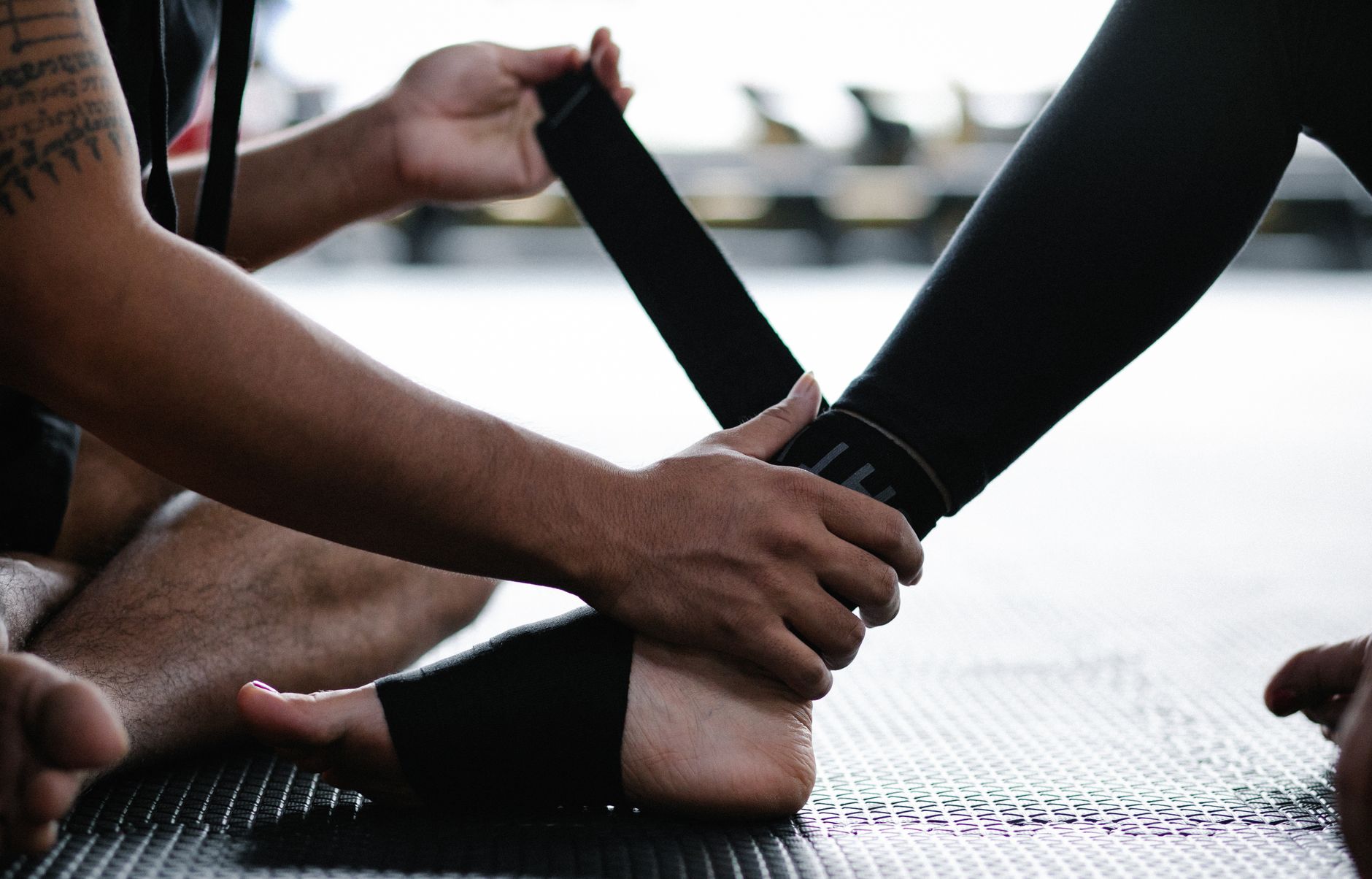
The Role of Eccentric Training in Tendon Rehabilitation
Eccentric training is one of the most useful tools in tendon rehabilitation because it can rebuild load tolerance, reduce pain, and restore athletic function when it is dosed correctly. Used carelessly, though, it is just more stress on an already irritated tendon.
Tendons do not need random stretching, endless rest, or magic exercises. They need the right load, at the right time, progressed in a way the tissue and athlete can actually tolerate.
When people search for tendonitis rehab, they usually want one answer: what should I do today to make this tendon stronger without making it worse? The evidence says progressive loading is the foundation, and eccentric training is one proven way to deliver that load. That matters for Achilles, patellar, elbow, and rotator cuff-related tendon pain because tendons respond to mechanical stress by changing their capacity over time. The key is that eccentric work is not a miracle in isolation; it works best when paired with pain monitoring, smart weekly load management, and sport-specific progression. If the flare-up started when training volume spiked, fix both the tendon and the plan. For a broader framework, see load management for injury prevention.
In practice, that means you should stop asking whether eccentrics are “good” and start asking better questions: What stage is the tendon in? What dosage can it tolerate? What performance demand do I need to get back to? Answer those well, and tendon rehab gets much more effective.
Research on Achilles and patellar tendinopathy consistently shows that progressive tendon loading improves pain and function. Eccentric-only programs can work very well, but heavy slow resistance often performs similarly when the progression is structured and adherence is high.
Why Eccentric Training Improves Tendon Health
Mechanical loading changes tendon capacity
Eccentric contractions create high muscular force while the muscle-tendon unit lengthens. That makes them useful for tendons because tendons need meaningful strain to adapt. Over time, appropriate loading helps improve collagen organization, tendon stiffness, and the ability to store and release energy. In plain language: the tendon becomes better at handling force rather than reacting to it.
This is why complete rest rarely solves chronic tendon problems. Symptoms may calm down temporarily, but the tendon often returns to sport or lifting with the same low capacity. Eccentrics give you a controllable way to reintroduce force. The adaptation is not instant; most meaningful tendon changes happen over weeks, not days, which is why consistent dosing matters more than any single session.
Pain reduction is only part of the goal
Many athletes judge rehab by pain alone. That is a mistake. A tendon can feel better at rest and still be underprepared for sprinting, deep knee flexion, repeated jumping, or heavy pressing. Good rehab improves pain, yes, but it also rebuilds function: calf endurance, landing tolerance, deceleration strength, and repeat-effort capacity.
That is where eccentric training shines. Because the lowering phase can be slowed, loaded, and measured, it gives coaches and clinicians an easy way to build tissue capacity step by step. Think of it as a bridge between early symptom control and full sport readiness. If the tendon must absorb force in sport, it needs training that teaches it to absorb force in rehab.
Tendonitis Rehab: Why the Label Matters

Most persistent “tendonitis” is actually tendinopathy
The term tendonitis rehab is still common, but persistent tendon pain is usually not a classic inflammatory problem. In many cases, the better term is tendinopathy, which reflects failed load adaptation, matrix disorganization, and altered pain sensitivity. That matters because the treatment emphasis shifts from “calm inflammation” to “restore capacity.”
For athletes and lifters, this changes the plan immediately. Ice, NSAIDs, and rest may help short-term comfort, but they do not build a tendon that can tolerate hill sprints, plyometrics, or depth drops. Progressive loading does. Eccentric training is one option inside that loading toolbox, especially when the tendon is irritable but still able to tolerate controlled exercise.
Where eccentrics fit in the rehab timeline
Eccentrics are rarely the first thing you use when the tendon is highly reactive. In an irritable stage, isometrics or reduced-range slow strength work may be better to settle symptoms. Once pain is stable and the athlete can tolerate basic loading, eccentric work can be layered in to challenge the tendon more specifically.
Think timeline, not dogma. Early stage: reduce provocative load and establish tolerable strength work. Mid stage: build tolerance with eccentrics or heavy slow resistance. Late stage: add energy-storage work, faster stretch-shortening tasks, and return-to-sport drills. If you are rehabbing jumper’s knee, this progression pairs well with sport-specific planning such as patellar tendon pain in jumping athletes.
Dosing Eccentric Training for Tendon Rehabilitation
Use pain-monitoring rules, not fear
The best practical hack in tendon rehab is a simple pain-monitoring model. During exercise, pain that stays in a tolerable range is often acceptable. A useful rule is 0-3/10 pain for reactive tendons and sometimes up to 5/10 in more settled, chronic cases, as long as symptoms return to baseline within 24 hours. Morning pain and stiffness the next day are usually your best check.
If pain spikes, lingers, or morning symptoms clearly worsen, the dose was too aggressive. That does not mean eccentrics are bad; it means the load was wrong. Good rehab is not pain avoidance at all costs. It is intelligent exposure that respects tissue irritability.
Dial in load, tempo, and range
Tempo is one of the easiest ways to make eccentric training more tendon-friendly. Start with a 3-5 second lowering phase, use controlled positions, and avoid forcing end-range compression if that position is provocative. For example, insertional Achilles pain often hates deep dorsiflexion, while patellar tendon pain may flare with very deep knee bend early on.
A practical starting template looks like this:
- 2-4 sets of 6-15 reps
- 3-5 second eccentric
- 60-120 seconds rest
- 2-4 sessions per week depending on irritability and total sport load
- Progress with external load before adding reckless volume
The classic Alfredson Achilles protocol uses 3 sets of 15 reps with the knee straight and bent, twice daily for 12 weeks. It can work, but many athletes do better with lower frequency and higher-quality loading they can actually recover from.
Progress by capacity, not by calendar
The next progression is simple: add load when pain behavior and performance say you can. If 3 sets of 10 feel stable for a week and next-morning symptoms are unchanged, increase the external load 5-10%. If symptoms worsen, trim range, reduce sport exposure, or hold load steady for another week.
A useful checkpoint is function. Can the athlete perform more heel raises, tolerate more landing contacts, or handle longer runs without symptom escalation? If not, the program may be improving exercise tolerance without improving real-world capacity. That is your signal to adjust the plan, not just repeat the same prescription.
Best Eccentric Exercises for Common Tendons
Achilles tendon
For mid-portion Achilles tendinopathy, the classic heel-drop is still a strong option. Use a step, rise up with both legs if needed, then lower on the affected side for 3-5 seconds. Add load with a backpack or dumbbell once bodyweight is easy. Straight-knee drops bias gastrocnemius; bent-knee drops shift more demand to soleus.
For insertional Achilles pain, modify the range. Do not chase a big heel drop below step level if that reproduces compression pain. Start from the floor or a flat surface and keep the eccentric controlled. If running is part of the comeback, pair tendon work with graded volume and mechanics. Athletes returning to impact work should also review return-to-running after injury.
Patellar tendon
Patellar tendon rehab often responds well to decline squats, split squats, and controlled squat variations with a slow lowering phase. A strong starting point is a decline squat eccentric for 3-4 sets of 8-12 with a 4-second descent. Use support on the way up if needed to emphasize the lowering phase without turning the set into a sloppy grinder.
Remember that patellar tendons care about total jumping and sprinting exposure. You can prescribe the perfect eccentric and still fail if the athlete keeps adding pickup basketball, extra dunk attempts, and conditioning circuits on top. The tendon only recognizes total load, not your intentions.
Elbow and shoulder tendons
Lateral elbow tendinopathy often responds well to eccentric wrist extension. Support the forearm, lift the weight up with help from the other hand, then lower slowly for 4 seconds. Start light, often 2-5 kg is enough, for 3 sets of 10-15. For rotator cuff-related tendon pain, controlled eccentric external rotation or scaption can fit well once basic range and tolerance are established.
Overhead athletes need more than isolated tendon drills, though. Shoulder tendon health depends on scapular control, trunk position, and workload distribution across the kinetic chain. If you coach throwers or lifters, build the eccentric work into a bigger shoulder plan such as shoulder prehab for overhead athletes.
Common Mistakes That Stall Tendon Health
Too much compression, too little strategy
A major mistake is forcing painful end ranges just because an exercise is “supposed” to be good for tendons. Compression-sensitive tendons often hate the exact positions lifters overuse: deep dorsiflexion for insertional Achilles pain, deep knee flexion under load for patellar pain, or repeated overhead internal rotation for shoulder issues. Modify the range first, then earn more range later.
Another mistake is stacking eccentric work on top of uncontrolled sport volume. If the athlete is sprinting, jumping, lifting, and doing rehab, somebody has to count the total stress. High-quality eccentrics can fail when everything around them is chaotic. If you are also rebuilding speed exposure, use a structured return model like sprint mechanics for return to play.
Stopping when pain drops instead of when performance returns
Tendon pain often improves before tendon capacity does. Athletes feel better, stop the program, then flare up when intensity rises again. The better endpoint is not “it no longer hurts walking downstairs.” The better endpoint is “I can tolerate the key demands of my sport or training week with stable symptoms.”
That means your exit criteria should include measurable markers:
- Side-to-side strength or endurance within an acceptable range
- Tolerance to planned running, jumping, or lifting volume
- No meaningful increase in next-morning tendon pain or stiffness
- Confidence in deceleration, landing, and repeated efforts
Coaches also need to distinguish rehab soreness from a true setback. When athletes are unsure, it helps to understand the difference between training soreness and warning signs of overload; see delayed onset muscle soreness vs injury.
FAQ: Eccentric Training, Tendonitis Rehab, and Return to Sport
Are eccentrics better than isometrics for tendon pain?
Not always. Isometrics can be useful early when pain is high and the goal is symptom reduction with lower irritability. Eccentrics are often more useful later when you need to rebuild tendon capacity through controlled, progressive loading.
The best answer is usually sequence, not competition: use isometrics when needed to calm things down, then progress to eccentrics or heavy slow resistance when the tendon can tolerate more meaningful work.
How long does tendonitis rehab take before results show?
Most athletes notice some symptom change within 2-6 weeks if load is managed well, but meaningful tendon remodeling and durable function usually take 8-12 weeks or longer. Chronic cases can take several months, especially when the sport keeps reloading the area.
The trick is to track both pain and performance. If pain is unchanged after 3-4 weeks, review the dose, exercise selection, recovery, and total training load before assuming the method does not work.
Can I keep training while doing eccentric training?
Usually yes, but only if the total weekly load is tolerable. Many tendon problems improve faster when athletes continue modified training instead of fully stopping. The modification might mean fewer jumps, flatter runs, reduced barbell volume, or less deep range.
The rule is simple: keep what the tendon can handle, remove what repeatedly spikes symptoms, and progress one variable at a time. Tendons hate chaos more than they hate work.
When should I stop and get assessed?
Get assessed if pain is severe, night pain is present, the area is hot and swollen, strength drops rapidly, or symptoms do not improve after several weeks of smart loading. Sudden loss of function, a pop, or major bruising needs prompt medical evaluation to rule out a partial or full rupture.
You should also seek help if you keep cycling between short-term relief and repeated flare-ups. That usually means the diagnosis, exercise dose, or return-to-sport progression needs a more precise plan.
Conclusion
Eccentric training earns its place in tendon rehabilitation because it gives athletes and coaches a practical, measurable way to rebuild capacity. It is not magic, and it is not the only effective loading method, but it works extremely well when matched to the right stage of rehab, the right pain rules, and the right progression. The big win is not just less pain. The real win is better tendon health: a tendon that can absorb force, tolerate volume, and handle the demands of real training again.
If you want help applying these principles to Achilles pain, patellar tendinopathy, or a full return-to-performance plan, ElitePTS can help you turn evidence into action. Explore more evidence-based rehab and performance resources at ElitePTS Articles and build a tendon program that delivers actual results, not guesswork.