




The Link Between Sleep Quality and Injury Recovery
If you want faster sleep and recovery results, stop treating sleep like a bonus. For injured athletes and lifters, sleep quality is one of the biggest levers for injury repair, pain control, and getting back to full athletic performance without wasting weeks.
Most rehab plans obsess over exercises, load management, and treatment sessions, but forget the recovery window where actual healing happens. During sleep, the body shifts toward tissue rebuilding, immune regulation, hormonal balance, and nervous system recovery. That matters whether you are dealing with a sprained ankle, irritated rotator cuff, post-op rehab, or chronic tendon pain. Research in sports medicine consistently shows that poor sleep is linked to more pain, slower healing, worse coordination, and a higher risk of future injury. The upside is practical: you can improve your healing environment tonight. In this guide, we break down how sleep quality affects recovery, what sleep targets to use on rest days, and the exact habits coaches, athletes, and clients can apply immediately.
Why Sleep Quality Drives Sleep and Recovery After Injury
Deep sleep is the body’s main repair shift
The most valuable part of sleep for healing is slow-wave sleep, often called deep sleep. This is where the body leans hardest into anabolic processes: protein synthesis, growth hormone release, glycogen restoration, and tissue turnover. Muscles, tendons, ligaments, and connective tissue do not magically rebuild during a rehab session; they adapt afterward, and sleep is the prime window.
That matters for both acute injuries and nagging overuse problems. If you strain a hamstring, irritate your patellar tendon, or come off surgery, your body needs energy and hormonal support to lay down new tissue. Sleep restriction blunts that environment. In simple terms: training and rehab provide the signal, but sleep provides much of the repair capacity.
REM sleep helps pain control and movement relearning
Recovery is not only about tissues. It is also about the brain. REM sleep supports learning, emotional regulation, and motor pattern consolidation. When an athlete is relearning landing mechanics, re-grooving a squat after back pain, or restoring shoulder control after a strain, the nervous system has to organize that new pattern efficiently.
Better sleep also improves pain tolerance. Poor sleep increases pain sensitivity and makes discomfort feel louder, which can lead athletes to underload when they should progress or push through pain when judgment is impaired. If you are rebuilding skill and confidence, sleep quality is part of rehab, not separate from it.
Athletes sleeping fewer than 8 hours per night have been shown to carry a significantly higher injury risk than peers who sleep more, a finding repeated across youth and high-performance settings.
How Poor Sleep Slows Injury Repair and Raises Re-Injury Risk
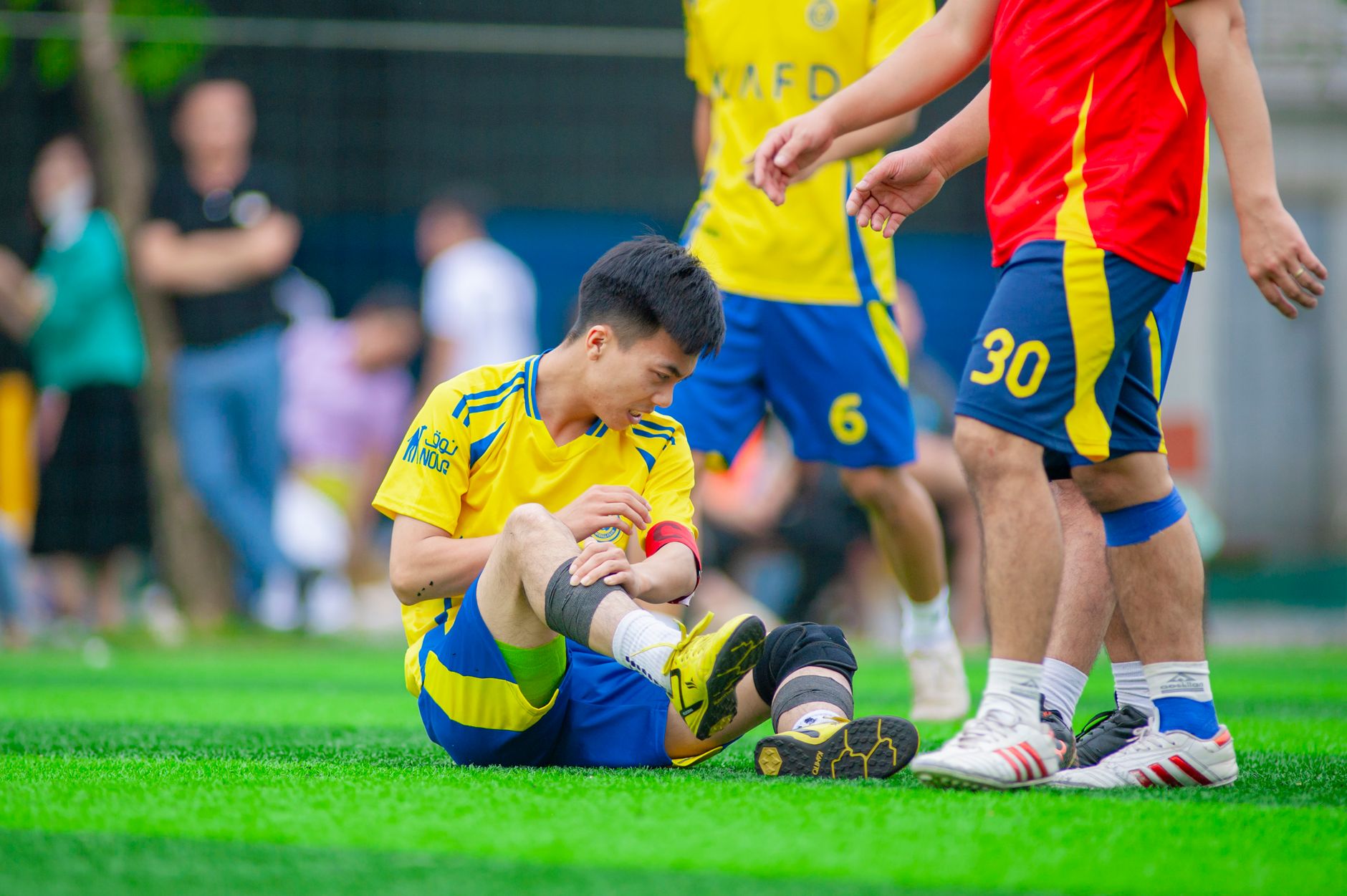
Short sleep drives inflammation and stress chemistry
When sleep drops, the body tends to shift toward a more inflammatory state. Cortisol regulation worsens, immune function becomes less efficient, and recovery from training or therapy sessions takes longer. For an injured athlete, that often shows up as more morning stiffness, slower symptom reduction, and a longer path between rehab progressions.
There is also a practical body-composition angle. Sleep loss can worsen appetite control, increase cravings for highly processed food, and reduce insulin sensitivity. That makes it harder to fuel healing well. If you want a strong recovery base, pair better sleep with consistent protein intake and predictable meal timing rather than relying on random snacking late at night.
Bad sleep hurts coordination, reaction time, and decision-making
Athletes often think only about soreness, but sleep loss also affects the stuff that gets people hurt: reaction time, balance, force control, and decision speed. That is why poor sleep can make a return-to-play session riskier even when the injured area feels decent. The tissue may be improving, but the system controlling it is under-recovered.
This is especially important in field sports, combat sports, and high-velocity lifting. If you are cutting, landing, rotating, or catching loads overhead, one bad night can lower movement quality enough to change the risk profile. That is also why sleep should be part of every readiness conversation, right next to pain score, swelling, and range of motion.
For coaches using fatigue management, tools like session RPE and readiness logs work even better when combined with sleep data. If you want a simple framework for monitoring fatigue, see heart rate variability for training decisions.
Sleep Targets for Athletes on Rest Days and During Rehab
Use 8 to 10 hours as your default recovery target
For injured athletes, a useful target is 8 to 10 hours in bed with a consistent wake time. Many people hear that and assume it is excessive. It is not. Rehab adds physical and mental stress, and healing tissues increase recovery demand. If you are sleeping 6.5 to 7 hours and wondering why progress feels slow, this is a high-value fix.
Consistency matters almost as much as duration. A stable sleep-wake schedule strengthens circadian rhythm, which improves sleep onset, sleep efficiency, and hormone timing. Aim to keep bedtime and wake time within about 30 to 60 minutes across the week, including weekends. That is one of the simplest ways to improve sleep quality without supplements.
Use naps strategically, especially on rest days
Naps are not a replacement for nighttime sleep, but they are useful during heavy rehab blocks or when pain disrupts the night. The best options are either a 20 to 30 minute power nap for alertness or a 90 minute nap if you are truly sleep-deprived and can protect nighttime sleep afterward. Avoid random 60-minute naps, which often leave people groggy.
Rest days are where many athletes make mistakes. They stay up later because they are not training early, then lose rhythm and start the next week behind. Keep the same wake time on rest days, add a walk outdoors within an hour of waking, and use the extra time for meal prep, mobility, and low-stress recovery work. For more on structuring those days, read how to use rest days effectively.
- Minimum target: 8 hours in bed nightly
- Ideal during injury repair: 8.5 to 9.5 hours
- Wake time drift: keep within 60 minutes
- Naps: 20-30 minutes or 90 minutes
The Night Routine That Improves Sleep and Recovery Fast
Build a 60-minute pre-sleep routine you can repeat
Elite results come from repeatable systems, not heroic nights. Start with a 60-minute wind-down. Dim room lights, reduce phone exposure, and stop high-stimulation work. If your mind races, write down tomorrow’s tasks on paper so your brain stops rehearsing them in bed. Keep the bedroom cool, dark, and quiet; around 17 to 19°C works well for many athletes.
Add one low-effort downshift habit: 5 minutes of nasal breathing, 10 minutes of light stretching, or a short shower 60 to 90 minutes before bed. The goal is not to build a fancy routine. The goal is to create cues that tell your nervous system the training day is over and recovery mode has started.
Use evidence-based inputs: light, caffeine, alcohol, and supplements
Morning light is one of the strongest circadian anchors available. Get 5 to 10 minutes outside shortly after waking, or 15 to 30 minutes if the sky is overcast. On the other side of the day, cut caffeine at least 8 hours before bed if you are sensitive, and avoid using alcohol as a sleep aid. It may make you drowsy, but it reduces sleep quality and fragments the second half of the night.
Supplement-wise, keep it simple. If tolerated and cleared by your healthcare provider, some athletes benefit from 200 to 400 mg magnesium glycinate or 3 g glycine 30 to 60 minutes before bed. If late hunger wakes you up, try 30 to 40 g casein protein pre-sleep to support overnight protein availability. More is not better; fix light, schedule, and caffeine first. For behavior-based sleep upgrades, see sleep performance habits.
Training and Nutrition Adjustments When Sleep Is Low
Autoregulate the session instead of forcing the plan
If an injured athlete sleeps poorly, the answer is not automatically “skip everything.” The smarter move is to autoregulate. Keep rehab intent, but reduce variables that increase injury risk: speed, complexity, impact, and near-maximal effort. A practical rule is to drop working load by 5 to 10% or cut 1 to 2 sets from the main exercises when sleep is clearly below baseline.
On very poor nights, shift the session toward tempo work, controlled isometrics, technique drilling, bike or sled conditioning, and mobility. For example, instead of heavy split squats at RPE 8, use split squat isometrics for 3 to 5 sets of 30 to 45 seconds and keep pain at or below 3 out of 10. You still create a healing signal without exposing tired tissues and a tired nervous system to unnecessary risk.
Match nutrition to recovery demand
Sleep loss increases the importance of solid fueling. Keep daily protein at roughly 1.6 to 2.2 g/kg bodyweight, divided into 4 to 5 feedings with at least 25 to 40 g protein each. Include a leucine-rich source such as dairy, eggs, meat, or whey. Hydration also matters because even mild dehydration can worsen fatigue and perceived pain.
Carbohydrates are useful during rehab, not the enemy. If poor sleep leaves you flat, a moderate carb intake around training can improve session quality and help control stress load. This is especially relevant when you are trying to maintain lean mass or preserve power output during return-to-play progressions. If you need a broader framework, read active recovery for athletes and recovery nutrition basics.
FAQ: Sleep and Recovery for Injured Athletes
Does sleeping more actually speed up healing?
It can, especially if you are currently under-sleeping. More accurately, better sleep quality and enough total sleep create the conditions that support tissue healing, immune function, pain regulation, and motor learning. You are not adding a magic treatment; you are removing a major barrier to adaptation.
If you already sleep 8.5 hours with good quality, forcing 10.5 hours will not guarantee faster healing. But if you live at 6 to 7 hours, pushing toward 8 to 9 is one of the highest-return moves available during rehab.
Are naps useful for injury repair?
Yes, especially when nighttime sleep is disrupted by pain, travel, or early training. Naps improve alertness, mood, and perceived recovery, and they may help you perform rehab work with better focus and movement quality.
Keep them strategic: 20 to 30 minutes for a quick reset, or 90 minutes for a full cycle when needed. Nap too late or too long, and you may make the next night worse.
Should I still train if I slept badly?
Usually yes, but not always at full intensity. If pain is elevated, reaction time feels off, or the session includes high-speed cutting, jumping, or near-max lifting, scale the plan. Keep the rehab habit, lower the risk.
A good decision filter is: maintain quality, control pain, and avoid sloppy reps. If you cannot do that, pivot to lower-risk work and live to progress tomorrow.
What is the best sleep supplement for athletes?
There is no best supplement that beats fundamentals. The highest-value tools are consistent wake time, morning light, a darker room, caffeine timing, and a real wind-down routine. Most athletes improve dramatically before they need pills or stacks.
If you do trial a supplement, keep it conservative and one change at a time. Magnesium glycinate or glycine are reasonable options for some people, but they should support a good routine, not replace one.
Sleep and recovery are not soft topics; they are performance variables. When sleep quality improves, injury repair gets more efficient, pain becomes easier to manage, rehab quality rises, and your return to full athletic performance becomes more realistic. The athletes who heal best are usually not doing secret exercises. They are stacking the basics relentlessly: enough sleep, smart rest days, consistent protein, and training decisions that match readiness.
If you want evidence-based coaching strategies that turn recovery science into practical results, explore more resources at ElitePTS. Start with better sleep tonight, measure the difference this week, and let recovery stop being the bottleneck in your training.