



Visualisation Techniques to Improve Your Lifting Form
Great technique is not just built under the bar. Mental rehearsal and visualisation can sharpen movement patterns before the first warm-up set, helping lifters clean up form, reduce wasted motion, and improve athletic performance when load gets heavy.
If you only think of imagery as a sports-psychology trick, you are leaving gains on the table. Research on motor imagery shows that vividly rehearsing a skill activates many of the same neural pathways used during real movement, especially when the image is specific, timed realistically, and tied to precise coaching cues. For lifters, that matters because technical breakdown usually happens before muscular failure: knees cave, the bar drifts, the brace softens, or the press loses position.
This is where mental rehearsal becomes useful, not mystical. It gives athletes and coaches a repeatable way to prime setup, tempo, and positional awareness. If you already use fundamentals like progressive overload and sound mechanics, adding imagery is a high-return layer. Pair this article with technical resources such as how to brace properly and broader strength training principles to turn better thinking into better lifting.
Why mental rehearsal improves lifting mechanics
Motor imagery trains the same pattern you want under load
Motor imagery is not daydreaming. In sports science, it means mentally simulating a movement with intention, sequencing, and sensory detail. Reviews by Guillot, Collet, and later meta-analyses in sport performance consistently show that imagery can improve skill execution, especially when the athlete already has some technical foundation.
For lifting, the benefit is simple: you rehearse the exact joint positions, timing, and force direction you want before fatigue and adrenaline distort them. That improves motor planning. When the set starts, you are not searching for the movement; you are recognizing a pattern you already practiced.
Visualisation works best when it is specific, short, and linked to cues
The biggest mistake is making imagery too vague. “I will squat well” is not useful. “Big breath, ribs down, sit between the hips, elbows under the bar, drive straight up” is useful because it gives the nervous system a technical script.
Use both internal imagery and external imagery. Internal means seeing and feeling the lift through your own eyes. External means watching yourself like video replay. Internal imagery improves body awareness; external imagery often helps with bar path, stance width, and posture. Advanced lifters should alternate both.
Motor imagery appears most effective when it is vivid, task-specific, and paired with physical practice rather than used as a replacement for it.
Build a 60-90 second visualisation routine before working sets

The pre-set script that actually transfers
Use a short routine before your top sets: 2 slow breaths, eyes closed for 10-15 seconds, then one full-speed mental rep and one slow-motion rep. The full-speed rep matches meet or training tempo; the slow-motion rep magnifies checkpoints like foot pressure, bracing, and bar path.
Keep the whole routine under 90 seconds. Longer is not better; longer often leads to overthinking. Your goal is priming, not fatigue. A lifter about to squat 160 kg does not need a meditation session. They need a clean mental snapshot of exactly what a good rep feels like.
Use cue stacking: one breath cue, one position cue, one finish cue
The most reliable script uses three cues only. Pick one breath cue, one position cue, and one finish cue. Example for a squat: “360 breath”, “knees track over mid-foot”, “drive traps into the bar”. Example for a deadlift: “wedge”, “bar on laces”, “push the floor away”.
Write the cues in your training log and keep them stable for 2-3 weeks. Constantly changing cues ruins transfer. If you need help building repeatable movement anchors, study technical primers like improve squat depth or complementary performance tools at https://peak.elitepts.com/breathwork-for-athletes.
- Timing: 10-20 seconds before the set
- Reps in the mind: 1 fast rep, 1 slow rep
- Cues: maximum 3
- Frequency: before every working set, not every warm-up set
Mental rehearsal for squat form
Rehearse the setup and descent, not just the ascent
Most lifters only visualize the grind. That is backwards. The squat is often won in the first five seconds: foot position, grip symmetry, upper-back tension, unrack walkout, breath, and descent control. If your image starts at the sticking point, you skipped the part that usually causes the sticking point.
Before each working set, picture your feet screwing into the floor, the ribcage stacked over the pelvis, and the bar centred over mid-foot. Then feel the descent: controlled, not slow; knees and hips breaking together; pressure even from heel to big toe to little toe.
Use imagery to fix common squat leaks
If you cave inward at the knees, visualize spreading the floor and tracking the knees over the second or third toe. If you fold forward, picture the chest and pelvis rising together out of the hole. If you lose depth consistency, imagine sitting between the hips rather than back behind them.
A practical protocol is 3-image correction blocks. For three sessions, keep the same correction image on every set. Example: a field-sport athlete who loses balance forward can visualize “tripod foot + bar over mid-foot” before each set of 5 at 70-80%. Then review video after set one and set three. This image-video loop often cleans technique faster than adding more accessory work.
If squats are your main issue, combine imagery with a technical review resource like improve squat depth so the mental picture matches solid mechanics rather than guesswork.
Visualisation for bench press and deadlift precision
Bench press: create tension before the bar moves
On bench, the image should start with body position, not the press itself. See your eyes under the bar, feet planted, upper back pinned to the bench, and shoulder blades tucked down and back. Then visualize the handoff, stacked wrists, controlled touch point, and the bar pressing back toward the rack, not straight up.
This matters because bench errors are usually tension errors: loose lats, floating feet, soft wrists, or inconsistent touch point. A 15-second visualisation that includes leg drive timing can improve repeatability immediately. For more technical detail, pair this with bench press technique guide.
Deadlift: rehearse the wedge and first inch off the floor
The deadlift is brutally sensitive to setup. Visualize walking to the bar, placing it over mid-foot, setting the lats, pulling the slack out, and wedging yourself between the floor and the bar before the plates leave the ground. If the first inch is right, the rest is usually cleaner.
Lifters who jerk the bar or let it drift forward should picture pushing the floor away while the chest rises with the hips. That image often reduces the instinct to “yank.” If you coach deadlifts, film from the side and match the athlete’s image to what the bar actually does. Technical resources like deadlift form mistakes help align the script with objective form.
Combine video feedback with visualisation for faster correction
Use a 30-second review between sets
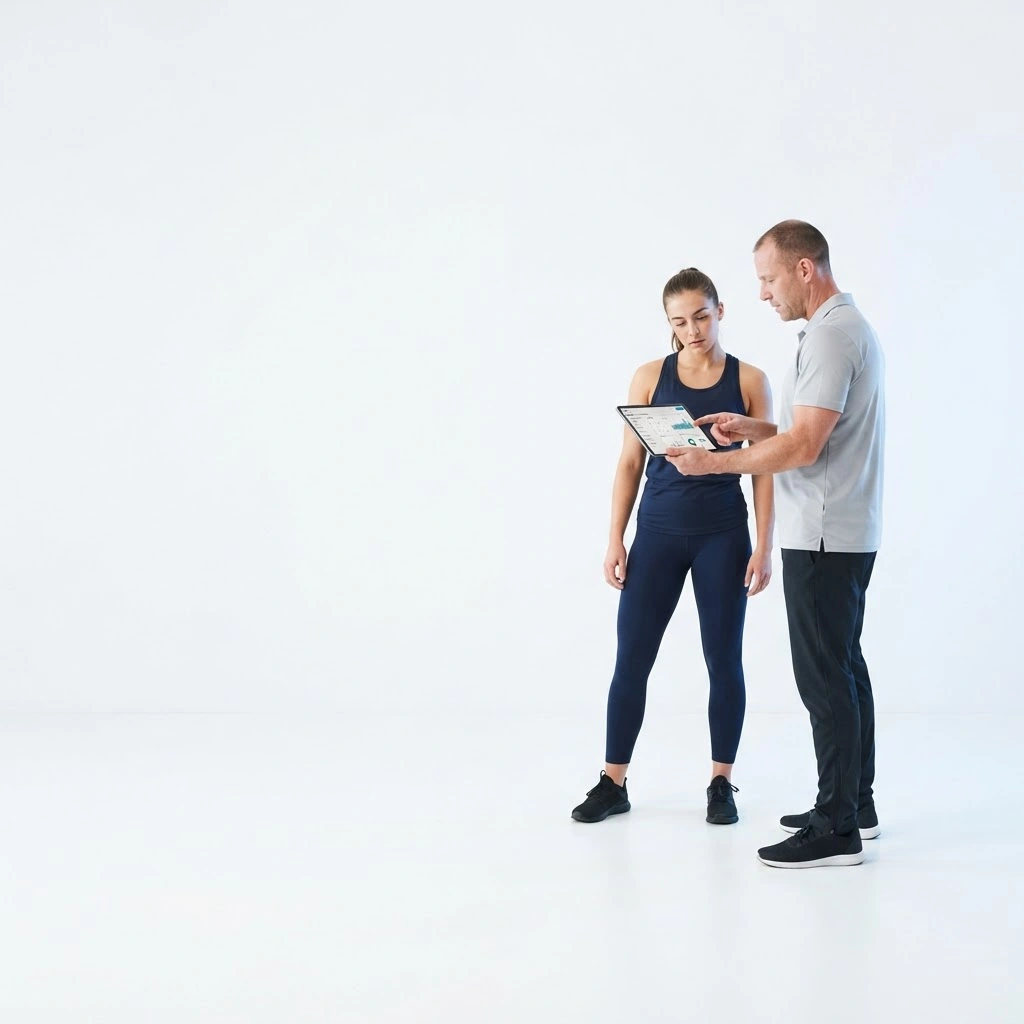
Video alone is not enough. Athletes often watch a bad rep, nod, and repeat the same error. The fix is to watch one clip, identify one error only, then immediately run a corrected image before the next set. This tightens the gap between feedback and execution.
A strong between-set protocol looks like this: film set, review within 30 seconds, choose one correction, close eyes for one fast and one slow mental rep, then perform the next set. Limit yourself to one change. Trying to fix three faults at once usually makes all three worse.
Coach the image, not just the error
Saying “don’t let your knees cave” gives the athlete a problem. Saying “push the floor apart as you stand” gives them an image they can use. Good coaching language creates movement, not anxiety. That is why visualisation works especially well with external cues and result-based phrases.
For team-sport and general-pop clients, this matters even more. They usually do not need six biomechanical details; they need one image that changes behaviour now. For broader mindset strategies, a useful complement is performance-focused education at https://peak.elitepts.com/sports-psychology-performance.
When visualisation backfires and how to avoid it
Do not use imagery to replace technical practice
Visualisation amplifies what is already there. If the movement model is poor, imagery may reinforce poor mechanics. That is why beginners should first learn the pattern with light loads, coaching feedback, and constraints, then add mental rehearsal once they can perform acceptable reps consistently.
A simple rule: if an athlete cannot explain the key positions of the lift in plain language, their image is probably too fuzzy to help. Teach the movement, show video, define the cues, then rehearse mentally.
Avoid over-arousal before heavy attempts
Some lifters turn visualisation into a hype ritual. That can raise tension too early and make them rush setup. For maximal attempts, keep imagery calm and crisp. One breath, one image, one cue. Save the adrenaline for the moment your hands touch the bar.
If you notice paralysis by analysis, shorten the script. Replace a detailed movie with a single frame: stacked brace in the squat, solid touch point in bench, wedged start in deadlift. Under high intensity, simpler images outperform complex ones.
FAQ: mental rehearsal and lifting form
How often should I use mental rehearsal in training?
Use it before every working set where technique matters, especially sets above roughly 70% of 1RM or sets taken within 3 reps of failure. That is where positioning starts to drift and a quick reset provides the most return.
You do not need it on every empty-bar set. Think of it as a precision tool for meaningful efforts, not a ritual you perform mindlessly.
Is internal or external visualisation better for strength athletes?
Both work, but they solve different problems. Internal imagery is better for feeling brace, balance, and tension. External imagery is better for seeing bar path, torso angle, and overall shape of the lift.
In practice, use internal imagery right before the set and external imagery during video review between sets. That combination tends to transfer well.
Can beginners benefit from visualisation?
Yes, but only after they have a basic technical map. A beginner who has never felt a proper brace or wedge may not have enough detail to rehearse accurately.
Start with coaching, demonstrations, and light practice. Once the athlete can perform consistent reps, add a 10-second image built around one or two simple cues.
Does visualisation increase strength or just technique?
Its biggest direct effect is usually on skill execution, consistency, and confidence under load. Better setup and cleaner force direction can make a lift feel stronger even if absolute force capacity has not changed yet.
Over time, that can support strength gains because better reps accumulate better training stress. Cleaner technique also helps lifters express the strength they already have.
Conclusion
Mental rehearsal is one of the simplest upgrades you can make to your training: short, specific, evidence-based, and immediately practical. When you use visualisation to rehearse setup, brace, bar path, and finish, you reduce technical noise and give yourself a better chance to express strength with precision. That means better reps, more consistent positions, and improved athletic performance over time.
Start today with a 60-90 second pre-set routine, no more than three cues, and one clear image for the lift you want to clean up most. Film your work sets, review one error, and rehearse the correction before the next attempt. If you want coaching that turns evidence into real-world results, explore more articles and education at ElitePTS.com. That is the Elite Catalyst standard: science you can use, today, for legitimate gains.