


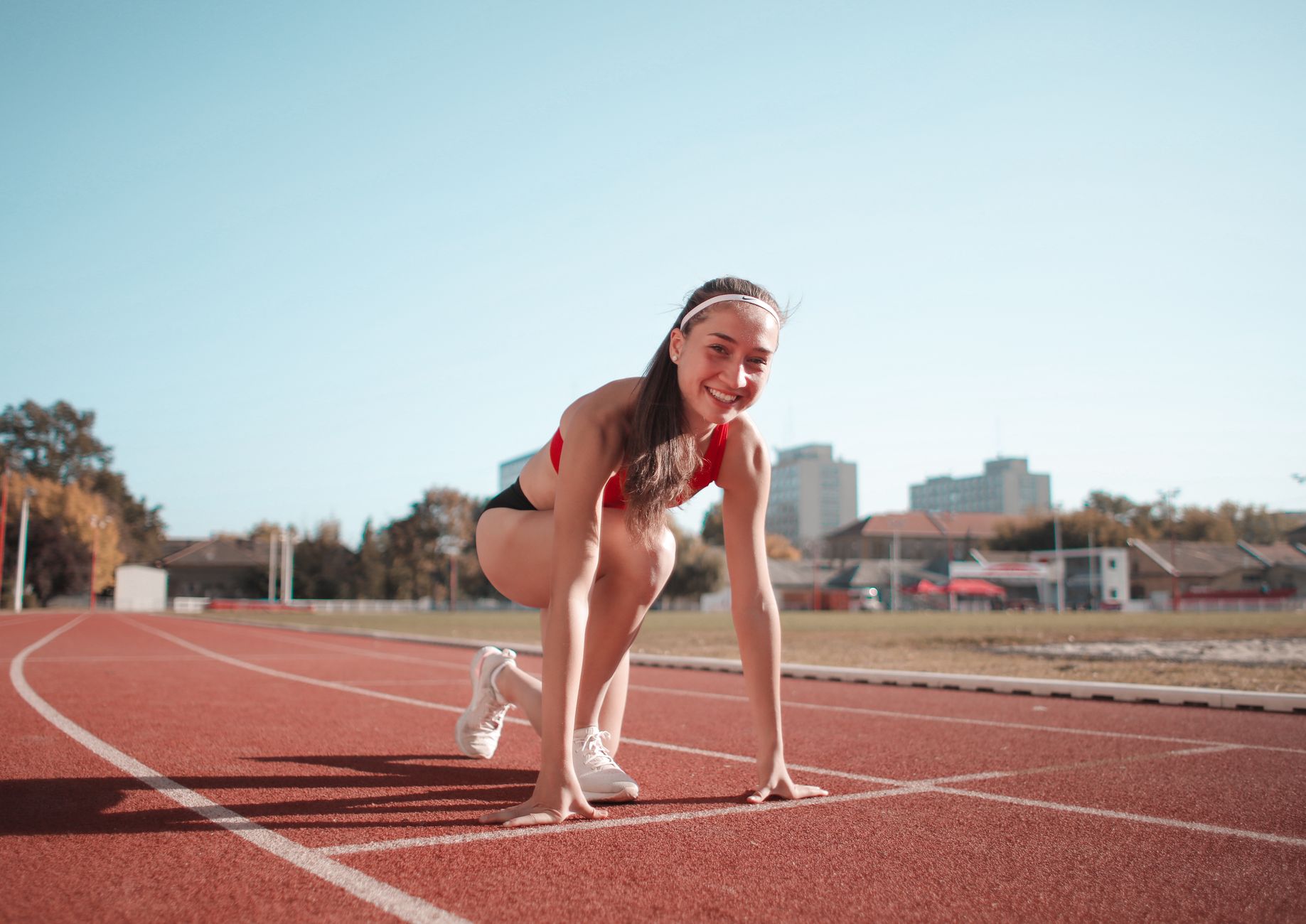
Advanced Visualization Strategies for Personal Record Success
A new personal record is rarely decided by muscle alone. Elite athletes use mental imagery during competition prep to rehearse technique, control arousal, and make the big attempt feel familiar before it ever happens.
Visualization is often sold as vague positive thinking, but the evidence says the useful version is much more specific: it is deliberate neural rehearsal. When done well, it sharpens motor timing, raises confidence, and reduces the mental noise that shows up before heavy singles, sprint finals, or skill-dependent max efforts. For coaches and lifters, that matters because PR misses are often not strength failures; they are execution failures. If you want a better training framework, combine this article with goal setting for strength athletes and a tighter pre-workout routine for strength performance. The goal here is simple: give you practical, science-backed visualization protocols you can use today to improve your next personal record attempt.
Why Mental Imagery Improves Personal Record Attempts
Neural rehearsal sharpens the exact motor pattern
High-quality mental imagery activates many of the same brain regions used during physical execution, including areas involved in motor planning and timing. Researchers such as Guillot and Collet have repeatedly shown that imagery is not a magical substitute for training, but a way to reinforce the movement pattern you already own. For strength and power athletes, that means better bracing, cleaner sequencing, and less hesitation under load.
This matters most when the lift is technically demanding. A heavy squat, clean, snatch, sprint start, or max-effort jump is decided in milliseconds. If your mind rehearses the exact rhythm of setup, breath, descent, transition, and finish, you reduce the chance of making a last-second technical error when the bar feels intimidating.
Mental imagery improves confidence and arousal control
Visualization also works because it changes how the body interprets stress. A PR day should feel activated, not chaotic. Rehearsing a successful attempt lowers uncertainty, and lower uncertainty usually means better arousal control, steadier breathing, and more useful self-talk. In practice, athletes often describe this as feeling like they have “already done the lift.”
That effect is strongest when imagery is paired with real training rather than used on its own. Holmes and Collins' PETTLEP model remains one of the most practical frameworks because it makes imagery feel like the real task instead of a generic relaxation drill.
Sport-psychology reviews consistently show that imagery produces the best performance gains when it is vivid, sport-specific, first-person, and paired with physical practice rather than replacing it.
Build a High-Fidelity Mental Imagery Script

Use PETTLEP so the rehearsal transfers to performance
PETTLEP stands for Physical, Environment, Task, Timing, Learning, Emotion, and Perspective. In plain English: make the image match reality. Wear the same shoes or belt, picture the exact room, run the movement in real time, and attach the same emotions you expect to feel during the attempt. That specificity is what turns mental rehearsal into a competitive edge.
For a personal record attempt, first-person imagery usually works best because it captures force, balance, and rhythm. External or third-person imagery still has value for technical review, but execution should mostly be felt from the inside. A good rule is 80% internal, 20% external when the goal is performance transfer rather than movement analysis.
Layer sensory details and limit your cue stack
The best scripts are short and dense, not long and theatrical. Use 30 to 60 seconds per rehearsal and include no more than three technical cues. More than that usually overloads attention. Add concrete sensory details: the knurling in your hands, chalk smell, foot pressure, command cadence, or the sound of the floor under your start position.
For example, a squat script might include: breath into belt, screw feet into floor, drive traps up into the bar. That is enough. If you need help keeping training cues consistent across the week, it also helps to review how to break through strength plateaus so your technical priorities stay stable.
- Rep 1: full-speed, first-person successful attempt
- Rep 2: slower image focused on the sticking point
- Rep 3: full-speed success with the same three cues
Competition Prep: Visualize the Environment, Not Just the Lift
Rehearse the room, the timing, and the distractions
Most athletes only visualize the best-case rep. That is incomplete competition prep. You also need the room: the warm-up area, the wait between attempts, the judge's commands, the loud music, the long pause before your name is called, or the delay while loaders change plates. A meet or race rarely feels like a quiet training session, so your imagery should not either.
Specificity reduces novelty, and reduced novelty lowers mental friction. A powerlifter should hear the rack and press commands. A thrower should feel the ring under the shoes. A sprinter should rehearse the call room, the set position, and the gun. If your event-day fueling is part of your stress, review a meet-day nutrition guide so your visualization matches a realistic timeline.
Run adversity branches before they happen
Elite performers do not just imagine success; they imagine disruption and a controlled response. This is called stress inoculation. You do not want your first emotional contact with a bad warm-up, slow platform turnover, or heavier-than-expected opener to happen in real time. Pre-solving the problem keeps you from burning energy on surprise.
Use simple if-then branches in your imagery. If the warm-up feels slow, then I extend my rest by two minutes and take one fast opener rehearsal. If the room is loud, then I narrow my focus to breath and foot pressure. If weigh-ins or timing become stressful, pair your imagery with a realistic weigh-in strategy for strength sports so your plan still holds under pressure.
- If the opener feels heavy, then slow the setup and trust the same cue stack.
- If the event runs behind schedule, then use one breathing cycle every 10 minutes to stay calm.
- If you miss a lift, then replay the correction, not the miss.
Advanced Mental Imagery Drills for PR Day
The three-rep imagery cluster
This is the most reliable drill for a heavy single or event attempt. Run three mental reps in 60 to 90 seconds: one full-speed success, one slow-motion rep focused on the sticking point, and one full-speed success under slight pressure. This creates technical clarity without overthinking.
Use the cluster before your heaviest warm-up and again before your personal record attempt. Coaches can run it verbally with athletes by using the same cue order every time. Consistency matters because the brain becomes faster at accessing the pattern when the script never changes.
Use contrast imagery and outcome locking
Contrast imagery means briefly seeing the most common error, then immediately replacing it with the correction. For example, a deadlifter who shoots the hips up might spend one second seeing that fault, then two full reps feeling lats tight, wedge hard, and push the floor away. The point is not to dwell on failure; it is to sharpen the correction.
Finish each sequence by locking onto a single outcome phrase. Good examples are “violent drive,” “fast elbows,” or “chest tall.” Avoid ten different thoughts. In a PR attempt, the athlete with one clear command usually outperforms the athlete trying to micromanage every joint angle at once.
Dosage, Timing, and Weekly Competition Prep Protocols
How often to visualize for best transfer
Short, frequent practice beats occasional marathon sessions. For most athletes, the sweet spot is 5 to 10 minutes, 4 to 6 days per week, plus 10 to 20 seconds of imagery before key sets. That amount is enough to build vividness and consistency without turning imagery into a draining ritual.
Use imagery at three moments: before training to set the motor pattern, between warm-ups to regulate focus, and the night before competition to reduce uncertainty. If your nervous system tends to run too hot, pair this with arousal control for athletes. If fatigue is part of the issue, clean up your recovery strategy first, because no mindset tool can overcome poor readiness.
A 7-day protocol before a personal record attempt
Use the following structure in the final week before a planned PR. Keep each session brief and repeat the same script so the movement feels automatic by test day.
- Day -7 to -5: 5 minutes nightly, 3 full-speed first-person reps plus 1 adversity branch.
- Day -4 to -3: 2 imagery reps before your top work sets, then 3 minutes post-session reviewing the best rep.
- Day -2: 4 minutes only; focus on commands, setup, and breathing rhythm.
- Day -1: 5 calm minutes at night; no hype, just clean execution and confidence.
- Day 0: 1 imagery cluster before the heaviest warm-up and 1 cluster before the PR attempt.
Track each session with two scores from 1 to 10: vividness and confidence. If vividness drops below 6, shorten the script. If confidence drops after imaging, your script is probably too outcome-focused and needs more process cues.
Common Mistakes That Kill Visualization Quality
Watching yourself like a movie instead of feeling the rep
Third-person imagery is useful for reviewing bar path or body position, but it often lacks force and rhythm. For performance, you need kinesthetic detail: where the weight sits, how the brace feels, what the sticking point sounds like, and how fast the finish happens. If you cannot feel the rep, the image is probably too passive.
The fastest fix is to make the rehearsal more physical. Stand in your setup, grip an empty bar or towel, wear your normal shoes, and breathe exactly as you would before the lift. Those physical anchors make imagery more vivid and more likely to transfer under pressure.
Rehearsing fantasy outcomes instead of controllable process
Seeing the medal, the applause, or the loaded bar can raise motivation, but it does not build execution. Your script should be mostly process. A good split is 70% process, 20% adversity response, 10% outcome. That keeps your attention on things you can actually control when the attempt begins.
Another mistake is ending on a miss. If you imagine a failed rep, always run the correction immediately and finish on a clean success. This protects confidence and teaches the nervous system what to do next. Coaches should reinforce this rule so athletes never turn mental rehearsal into mental sabotage.
FAQ: Mental Imagery and Competition Prep
How long does mental imagery take to improve performance?
Some effects are immediate. Many athletes feel better focus and lower anxiety after one good imagery session. More durable gains in confidence, consistency, and technical execution usually show up after 1 to 2 weeks of regular practice.
The key is repetition with the same script. If you change cues every day, you lose the neural efficiency that makes imagery useful.
Should I visualize only successful lifts?
No. Most of your reps should be successful, but a small amount of adversity rehearsal is valuable. A practical ratio is 70 to 80% successful reps and 20 to 30% problem-solving reps.
Just never end on the mistake. Always finish with the corrected, successful version of the movement.
Can beginners use visualization for a personal record?
Yes, but beginners should keep it simple. Use 20 to 30 second scripts, no more than two technical cues, and pair the imagery with recent video of good training reps so the image is accurate.
Advanced athletes can handle more sensory detail because they already have a stable movement pattern to rehearse.
What if visualization makes me more anxious?
That usually means you are imaging threat instead of execution. Shift the script toward breathing, setup, and first movement. Use a longer exhale, around 6 to 8 seconds, before each rep in your mental sequence.
If anxiety stays high, down-regulate first, then do one short success image. Do not try to hype yourself up from a panicked state.
Is audio-guided imagery worth using?
Yes, especially for athletes who struggle with consistency. A 30- to 45-second voice note using your exact cue stack can improve timing and reduce decision fatigue before big attempts.
Just make sure the script sounds like your real coaching language. Generic motivational audio is much less effective than specific instructions you already trust.
Conclusion: Turn Mental Imagery Into a Repeatable PR Tool
The biggest mistake athletes make with visualization is treating it like inspiration instead of training. If you want a new personal record, use mental imagery the same way you use warm-ups, cueing, and recovery: with structure, repetition, and measurable intent. Build a short first-person script, rehearse the real environment, add one adversity branch, and dose it consistently across your competition prep. Do that and your PR attempt stops feeling like a surprise and starts feeling like a pattern you have already solved. If you want more evidence-based systems for strength, mindset, and performance, visit ElitePTS articles and keep building your own Elite Catalyst playbook.