


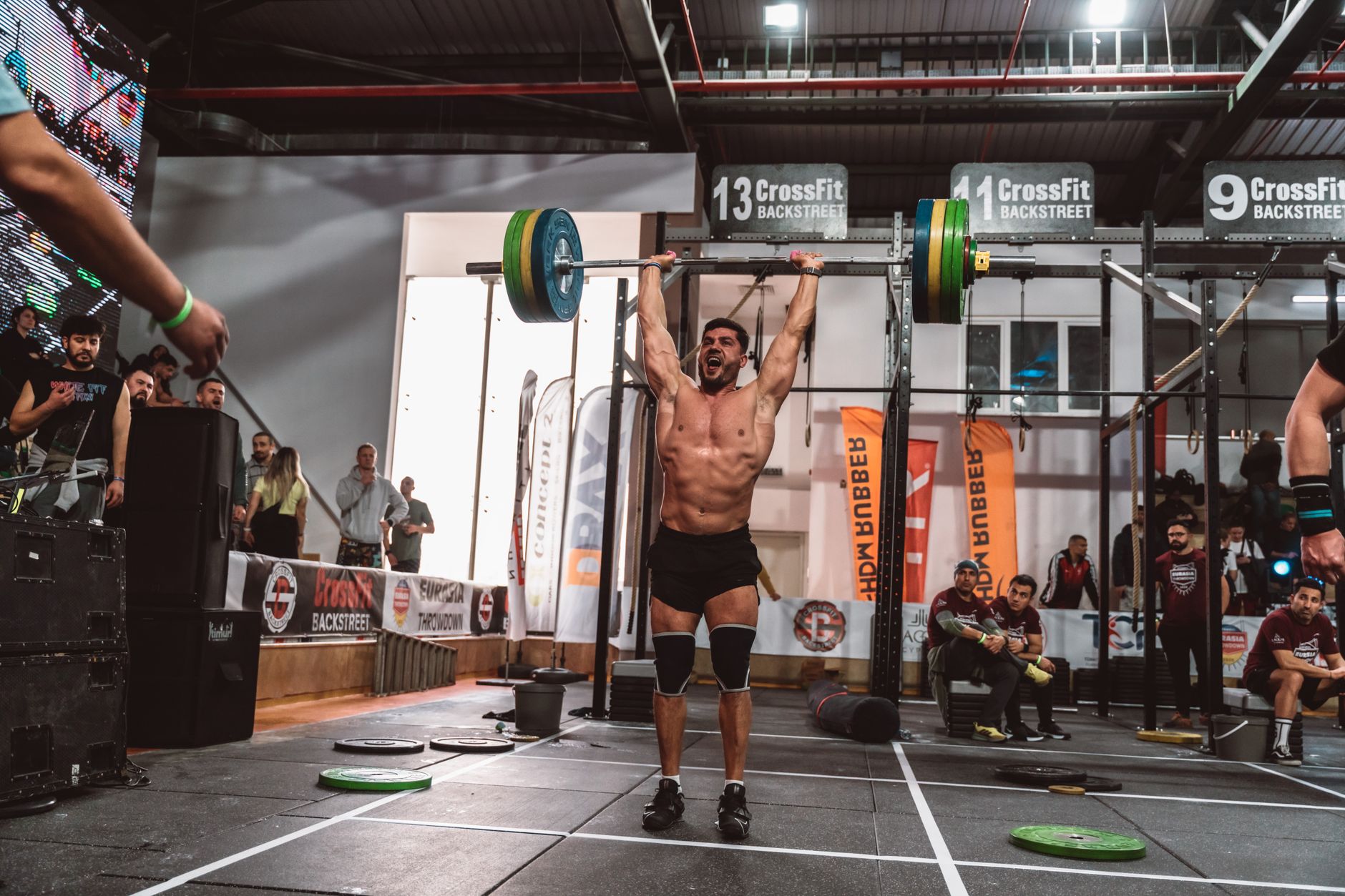
Developing a Growth Mindset for Strength Training
A real growth mindset changes how you handle missed lifts, slow progress, and the days when lifting motivation is low. The best strength training mindset is not blind positivity; it is the skill of turning hard feedback into better programming, better execution, and more consistent work.
Most lifters say they want to get stronger, but many still interpret a bad session as proof that they are not built for squats, deadlifts, or heavy benching. That is a fixed mindset response: ability feels permanent, so effort becomes a threat instead of a tool. In strength training, that belief quietly kills progress because it makes athletes avoid hard reps, overreact to plateaus, and chase motivation instead of systems.
Carol Dweck's work on mindset, Bandura's research on self-efficacy, and broader sport psychology research all point in the same direction: athletes improve faster when they see ability as trainable and pair that belief with deliberate practice, feedback, and recovery. That last part matters. Mindset alone is not magic. A growth mindset only helps when it changes behavior under the bar. This article will show you exactly how to build that behavior with practical protocols you can use this week.
What a Growth Mindset Really Means in the Weight Room
Fixed beliefs make hard training feel personal
In a fixed mindset, a missed triple at 315 is not just a training event; it becomes an identity statement. Lifters start saying things like, 'I am bad at bench,' 'I do not recover well,' or 'I am just not explosive.' Those labels feel honest, but they are usually incomplete. More often, the miss came from poor load selection, rushed bracing, weak sleep, or not enough practice in a specific rep range.
A growth mindset reframes that same miss as information. Instead of asking, 'What is wrong with me?' you ask, 'What variable can I improve?' That shift protects effort. It also improves coaching because technique, volume, recovery, and exercise selection become adjustable levers instead of excuses. In practice, strong athletes do not avoid evidence of weakness; they use it to target the next block of training.
The evidence supports behavior change, not empty hype
Mindset research in education and sport suggests that believing skills can improve tends to increase persistence, strategy use, and response to setbacks. But the effect is strongest when athletes are also given a clear path forward. That is why the best mindset coaching sounds practical, not motivational: keep the load honest, track the data, and repeat quality exposures.
Elite takeaway: Mindset does not replace programming. Its value is that it changes what you do after a hard set, a missed lift, or a frustrating month.
For lifters, that means judging progress by repeatable behaviors: attendance, top-set execution, bar speed, technique quality, and recovery habits. If you want the psychological side of training to produce actual gains, it must connect to objective markers. A good starting point is learning how progression really works. Read this guide to progressive overload and pair it with a mindset that treats every training week as a test-and-adjust cycle.
Build a Strength Training Mindset with Process Goals

Outcome goals inspire, but process goals drive adaptation
Wanting a 405 squat or a bodyweight bench press is useful because it gives direction. The problem is that outcome goals are distant and emotionally noisy. They do not tell you what to do today when your warm-ups feel heavy. Process goals do. They focus on the controllable actions that actually create adaptation: hitting planned sessions, staying within target RPE, owning setup cues, and sleeping enough to recover.
A strong strength training mindset uses both. Set one 8- to 12-week outcome goal, then attach three weekly process goals. Good examples are: complete 4 training sessions, log every top set with RPE, and average 7.5 or more hours of sleep. This narrows attention to behaviors you can win immediately, which builds competence and protects motivation when bodyweight or bar numbers stall for a week or two.
Use a 12-week scoreboard, not emotion, to judge progress
Run this simple 12-week scoreboard. Every week, grade yourself on four metrics from 0 to 2: session completion, effort accuracy, technique quality, and recovery habits. A perfect week is 8 points. Over 12 weeks, aim for 72 or more points out of 96. That threshold usually means you have been consistent enough to expect real performance change, even if any one session felt average.
Keep the scoreboard next to your training log. If you need help building consistency around it, pair your gym routine with habit cues like packing your bag after dinner or training at the same time each day. That is where implementation structure matters more than willpower. A practical companion is this article on habit stacking for consistency, which pairs well with a process-based approach to strength.
- Metric 1: Planned sessions completed
- Metric 2: Top sets stayed within target RPE range
- Metric 3: Technique rated 4 or 5 out of 5 on key lifts
- Metric 4: Sleep, hydration, and nutrition targets met at least 5 days per week
Turn Failure and Plateaus into Useful Feedback
Use a two-minute post-set review after hard lifts
Growth-minded lifters do not wait until the end of the month to learn from training. They review hard sets immediately. After every top set above RPE 8, spend two minutes recording five things: load, reps, RPE, technique grade out of 5, and one sentence on what limited the set. Keep it brutally simple. Over time, patterns show up fast.
For example, if your notes repeatedly say 'lost brace on rep 4' or 'elbows flared on the press,' that is gold. Now your next block has a clear technical target. If the notes say 'sleep 5 hours' three times in one week, the issue is not discipline in the squat rack; it is recovery management. This is exactly how a growth mindset becomes performance behavior rather than self-help language.
Audit plateaus before changing your whole program
A plateau is only useful if you diagnose it correctly. Before you swap programs, answer five questions: Have I actually been progressing load, reps, or quality? Is my RPE honest? Am I under-recovering? Am I practicing the lift frequently enough? Am I using accessories that target the limiting muscle groups? Most stalls come from one of those problems, not from needing a completely new identity as an athlete.
Start with objective review. Compare the last 4 to 6 weeks of top sets, back-off work, sleep, bodyweight, and soreness. If intensity drifted too high, autoregulation may be the fix, not more motivation. Review RPE and autoregulation for strength to tighten load selection, and use this strength plateau guide before making dramatic changes. Most lifters need better feedback loops, not more complicated plans.
Missed lifts are expensive only when you learn nothing from them. If you capture the reason, they become paid coaching.
Protect Lifting Motivation on Low-Energy Days
Use implementation intentions so motivation is not the gatekeeper
Peter Gollwitzer's research on implementation intentions is highly relevant to lifters: deciding in advance when, where, and how you will act makes follow-through more likely. Instead of saying, 'I will train if I feel up for it,' write, 'On Monday, Wednesday, and Friday at 6:00 a.m., I will do my first warm-up set within 10 minutes of entering the gym.' Specific cues reduce decision fatigue.
Use a three-tier session rule on days when motivation is low. Tier 1 is the full session. Tier 2 is a reduced session: main lift plus one accessory in 25 to 30 minutes. Tier 3 is the minimum effective dose: 2 compound lifts for 2 sets of 5 at RPE 6 to 7, then leave. This rule protects identity and momentum. Missing one hard day does far less damage than disappearing for a week because you thought the session had to be perfect.
Build confidence from evidence, not from hype
Confidence grows when your brain has receipts. That means stacking small wins you can verify: 3 straight weeks of planned sessions, a cleaner bar path, one more rep at the same load, or better recovery habits. This is where self-efficacy matters. Athletes trust themselves more when they repeatedly do hard things with a clear standard, not when they simply tell themselves to be confident.
Recovery is part of that confidence loop. Poor sleep, under-fueling, and unmanaged soreness can feel like a motivation problem when they are really readiness problems. If your effort is inconsistent, audit sleep first with this recovery article, and tighten pre-training nutrition with smart fueling strategies for stronger training. Better energy makes a better mindset easier to sustain.
FAQ: Growth Mindset and Strength Training
Can a growth mindset really make me stronger?
Indirectly, yes. A growth mindset does not add kilos to the bar by itself. What it does is improve the behaviors that make strength gains more likely: consistency, persistence through plateaus, better response to coaching, and more honest review of training errors. Those factors compound over months.
If two lifters run similar programs, the one who treats setbacks as feedback usually gets more from the plan. They miss fewer weeks, make better adjustments, and stay emotionally stable when progress is not linear. That is often the difference between decent progress and elite consistency.
How do I keep lifting motivation high when progress is slow?
Stop treating motivation as the engine. Make it the bonus. Build a training system that still works on average days: fixed schedule, pre-packed bag, written first exercise, and a three-tier session rule. Motivation rises and falls, but systems lower the chance that low mood turns into no training.
Also shorten your feedback cycle. Do not wait for a new one-rep max to feel progress. Track weekly wins like attendance, rep quality, and RPE control. When the brain sees evidence of progress every seven days, effort feels more worthwhile and adherence gets easier.
What should coaches say to build a better strength training mindset?
Use skill-based language instead of identity labels. Say, 'Your brace broke on rep 3; next set, own the exhale and lock the ribcage down,' instead of, 'You are mentally weak today.' Specific, changeable feedback creates agency. Personal labels create shame and confusion.
Coaches should also praise the right targets: repeatable setup, smart effort, and consistent attendance. Complimenting only outcomes can make athletes fear mistakes. Complimenting process teaches them that progress is built, not granted.
Is positive self-talk enough to create a growth mindset?
No. Positive self-talk helps only when it is believable and linked to action. 'I am strong' is less useful than 'Big air, slow descent, drive hard out of the hole.' The first is emotional. The second improves performance. Under heavy load, actionable cues beat vague affirmations.
The best self-talk is instructional, short, and tied to evidence. Use two or three cues for each main lift, then review whether they improved execution. That creates a loop between thought and outcome, which is what makes a growth mindset durable.
Conclusion: Train Your Mindset Like You Train Your Lifts
The best growth mindset for lifters is not motivational fluff. It is a repeatable system for interpreting stress, mistakes, and slow progress in a way that improves training decisions. If you want a stronger strength training mindset and more reliable lifting motivation, focus on controllable behaviors: process goals, immediate feedback, honest RPE, minimum-day rules, and recovery habits that keep you coachable under fatigue.
Start this week with three actions: build a 12-week scoreboard, run a two-minute review after every hard top set, and create a Tier 1, Tier 2, and Tier 3 version of each training day. Those simple tools turn frustration into information and information into results.
If you want more evidence-based tools that convert effort into real gains, explore the full library at ElitePTS Articles. That is the Elite Catalyst standard: practical science, better decisions, and stronger athletes.