


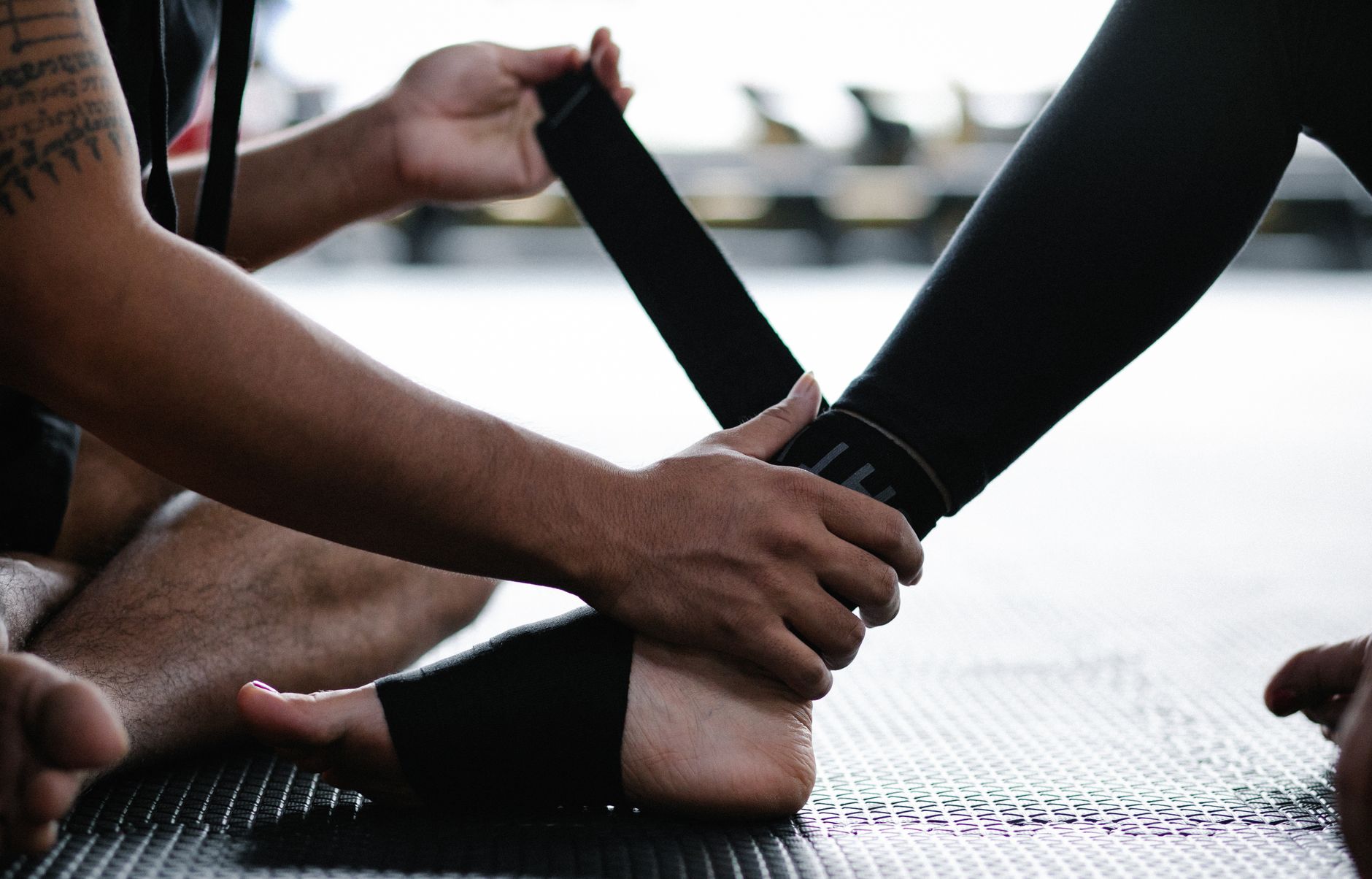
Improving Ankle Dorsiflexion for Deeper Squats
If your heels pop up, your chest dumps forward, or your knees stop moving long before your hips do, poor ankle mobility is often the hidden limiter. Better ankle dorsiflexion can immediately improve squat depth, clean up mechanics, and reduce the compensations that beat up knees, hips, and low backs.
For lifters, field-sport athletes, and coaches, ankle range is not a cosmetic issue. It changes how force is absorbed, how the tibia tracks over the foot, and how deep you can sit into a squat without losing balance. When dorsiflexion is limited, the body usually finds depth somewhere else: heels rise, feet collapse, knees cave, or the trunk leans excessively forward. None of those are ideal if the goal is stronger, safer training.
This guide breaks down what actually works to improve ankle dorsiflexion and improve squat depth: how to test it, the best drills, exact dosages, and how to keep the gains instead of chasing temporary mobility. The goal is simple: give you practical, evidence-based tools you can use today in the gym, on the field, or with clients.
Why Ankle Dorsiflexion Matters for Deeper Squats
What ankle dorsiflexion really is
Ankle dorsiflexion is the motion of the shin moving forward over the foot. In a squat, it is the ability of the tibia to glide over a stable foot while the heel stays down. That sounds simple, but it depends on multiple pieces working together: calf muscle length, ankle joint mechanics, foot stability, and the nervous system tolerating end range.
For squat depth, dorsiflexion is a gateway motion. If you cannot get enough forward knee travel, your center of mass shifts backward and your body has to compensate. Olympic lifters often manage this with a more upright torso and significant knee travel, while powerlifters may use a wider stance and more hip contribution. Either way, a baseline amount of ankle range still matters.
What limited ankle mobility does to your squat
Research on squatting and landing mechanics consistently shows that restricted dorsiflexion is linked with more heel rise, more foot pronation, greater knee valgus, and increased forward trunk lean. In practical terms, that means the lift becomes less efficient and often less repeatable under load.
Look for these common signs:
- Heels lifting at the bottom of the squat
- Knees stalling while hips keep dropping backward
- Feet turning out more than normal to create fake range
- Weight shifting to the toes or inside edge of the foot
- Asymmetry from side to side during descent
Even a small side-to-side dorsiflexion deficit can change squat mechanics. In coaching, asymmetry matters as much as total range.
How to Test Ankle Mobility Before You Stretch
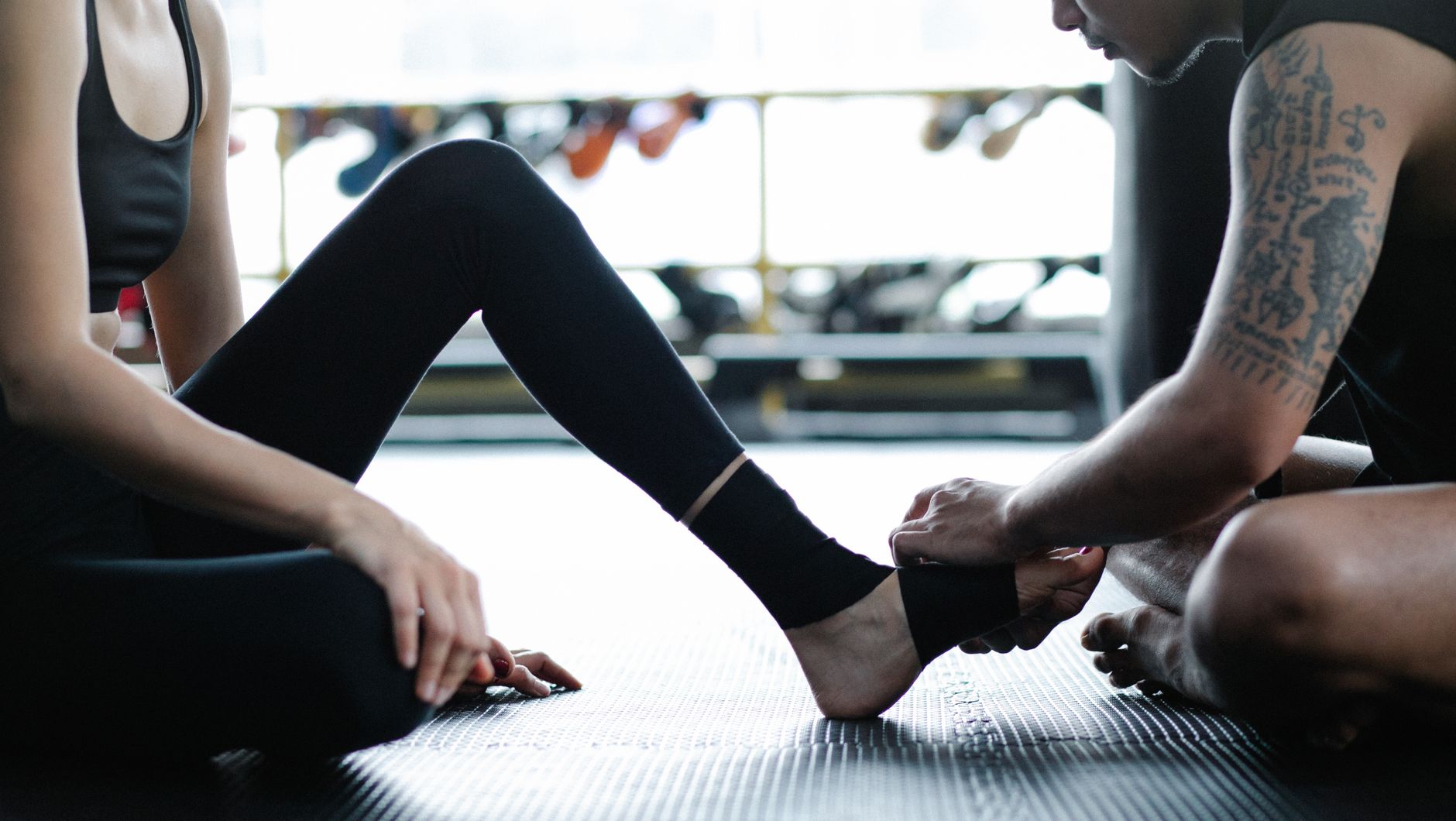
Use the weight-bearing lunge test
The most practical screen is the weight-bearing lunge test. Stand facing a wall, keep the heel flat, and drive the knee toward the wall over the second or third toe. Move the foot back until the knee can just touch the wall without the heel lifting. Measure the distance from the big toe to the wall.
For many athletes, a useful target is roughly 10 to 12 cm on each side, though structure and sport demands matter. More important than chasing a perfect number is spotting asymmetry. A difference greater than 1.5 to 2 cm side to side is worth addressing, especially if the squat also looks uneven or painful.
Screen the squat, not just the ankle
A good ankle test is necessary, but the squat itself tells you whether the range is usable. Run a bodyweight squat screen from the front and side. Watch heel position, knee travel, arch control, and whether the torso has to fold forward to find depth.
A fast coaching trick is to repeat the same squat with a small heel elevation. If depth and balance improve immediately, limited ankle dorsiflexion is probably a major contributor. If nothing changes, the real limiter may be hips, stance, foot control, or fear at the bottom. For deeper mechanics, see squat technique for strength and safety and compare the athlete's pattern before you prescribe more stretching.
The Fastest Ways to Improve Ankle Dorsiflexion
Stretch the right tissues with the right dose
The calf complex is usually the first place to address. The gastrocnemius crosses the knee, so it responds best with the knee straight. The soleus does not cross the knee, so bent-knee stretches are essential for squat-specific dorsiflexion. If you only stretch with a straight leg, you often miss the restriction that shows up at the bottom of the squat.
Use this evidence-based starting dose: 2 to 4 sets of 30 to 60 seconds for both straight-knee and bent-knee calf stretches, 5 to 7 days per week for 2 to 4 weeks. Long-duration stretching tends to beat random 10-second holds. Mild discomfort is fine; sharp pinching in the front of the ankle is not.
Add joint mobilization and active end-range work
Stretching alone often creates short-term range but poor transfer. To make it stick, pair it with ankle mobilizations and strength at end range. A practical option is a half-kneeling knee-over-toe mobilization: drive the knee forward over the toes while the heel stays heavy and the arch stays active. Pause for 2 to 3 seconds at end range for 2 to 3 sets of 8 to 12 reps.
Banded mobilizations can help some athletes, but they are not magic. The real win is loading the new position. After mobilizations, perform heel-flat squat rocks, split squat isometrics, or tempo goblet squats. If you want a warm-up sequence that blends this in well, start with warm-up for strength training principles and slot ankle work before your first squat sets.
Best Drills to Improve Squat Depth and Keep It
Drill 1: Knee-over-toe split squat isometric
This is one of the best drills because it combines mobility, strength, and position tolerance. Set up in a split squat with the front heel flat. Drive the front knee forward over the toes until you feel a strong stretch in the lower calf or Achilles, then hold. Keep the foot tripod grounded and the knee tracking over the middle toes.
Prescription: 3 to 4 sets of 30 to 45 seconds per side. Add load with dumbbells when bodyweight becomes easy. This drill is especially useful for athletes who gain range from stretching but lose it as soon as the bar gets heavy.
Drill 2: Heel-elevated goblet squats, then phase the heel out
A small heel elevation is not cheating; it is a bridge. If limited dorsiflexion stops quality squatting, elevate the heels 1 to 2 inches, perform goblet squats with a 3-second descent and 2-second pause, and train the pattern you actually want. This builds confidence and control at depth while you improve raw ankle range.
Run 3 to 5 sets of 6 to 8 reps after mobility work. Over time, reduce the heel height or alternate elevated and flat-footed sets. If the hips are also limiting your bottom position, combine this with hip mobility for better squats so the new ankle range has somewhere useful to go.
A 10-Minute Ankle Mobility Plan to Improve Squat Depth
Pre-lift protocol: use it before squat sessions
If your goal is immediate performance, keep the pre-lift block short and targeted. The goal is not to exhaust tissue; it is to open range, groove the pattern, and carry that range into loaded squats within minutes.
Use this 10-minute protocol:
- 1 minute each side: foam roll calf lightly, just enough to reduce tone
- 2 x 30 to 45 seconds each side: straight-knee calf stretch
- 2 x 30 to 45 seconds each side: bent-knee soleus stretch
- 2 x 10 each side: half-kneeling knee-over-toe mobilization with 2-second pause
- 2 x 20 to 30 seconds each side: split squat isometric at end range
- 2 x 6: tempo goblet squats with a pause at depth
Off-day protocol: build lasting range
On non-squat days, the goal shifts from quick readiness to adaptation. Use slightly longer holds and a little more total volume. Consistency beats novelty here. Most athletes respond better to daily low-dose work than to one brutal mobility session each week.
Start with 10 to 15 minutes, 4 to 6 days per week for 3 weeks. Re-test the weight-bearing lunge once per week, not every day. If you gain range but still feel unstable in the hole, add foot and lower-leg strength. That is where mobility becomes usable performance instead of just a bigger number on a screen.
When the Ankle Is Not the Real Limiter
Check the foot, hip, and stance first
Not every shallow squat is an ankle problem. A stiff big toe, poor foot tripod, weak arch control, or a stance that does not match the athlete's hip anatomy can all mimic restricted dorsiflexion. Some lifters need a slightly wider stance or more toe-out to let the femur and pelvis move cleanly.
Watch whether the athlete can keep pressure through heel, base of the big toe, and base of the little toe. If the arch collapses as soon as the knee moves forward, the ankle may not be the main issue. For athletes who also report medial knee stress, review knee pain during squats and correct the foot before assuming the ankle is the culprit.
Know when pain needs more than mobility work
Front-of-ankle pinching, swelling, prior fracture, repeated sprains, or a hard block that never changes with warm-up can indicate joint impingement or a more complex restriction. That is different from normal calf tightness. Forcing range into a painful block usually creates irritation, not progress.
If pain persists, the athlete needs a fuller assessment of movement quality, training load, and tissue tolerance. This is especially true in return-to-sport cases, where ankle mobility has to be matched with strength, plyometric tolerance, and positional control. For the bigger picture, coaches can review return-to-sport readiness concepts and make sure mobility work fits the stage of rehab.
FAQ: Ankle Mobility and Squat Depth
How long does it take to improve ankle dorsiflexion?
Most athletes see a small short-term change in a single session, especially if stretching is followed by loaded end-range work. A realistic improvement is often 1 to 3 cm on the weight-bearing lunge test over 2 to 4 weeks when work is done consistently.
The bigger question is whether the new range shows up in the squat. That usually takes technique practice and strength at depth, not just more stretching. Test the lunge weekly and film your squat from the side every 1 to 2 weeks.
Should I use weightlifting shoes or heel wedges?
Yes, if they help you train the pattern safely and productively. A raised heel reduces the ankle dorsiflexion demand and can instantly improve torso position and depth. That is useful for lifters with long femurs, temporary stiffness, or sport demands that reward upright squatting.
But do not let footwear replace capacity forever. Use the heel as a tool while you build actual range. A good approach is to keep your main work in shoes, then finish with one flat-footed accessory squat variation and your ankle drills.
Are banded ankle mobilizations worth it?
They can help, but mainly because they let some athletes find end range more comfortably. The evidence for band-specific superiority is limited. In practice, bands are optional; what matters most is reaching a quality end range and then strengthening it.
If banded mobilizations feel better than unbanded versions, use them for 2 to 3 sets of 8 to 12 reps. If they do nothing, skip them and spend that time on bent-knee calf stretching, split squat isometrics, and paused squats.
Can I squat through pinching in the front of the ankle?
Mild stretching discomfort in the calf is acceptable. Sharp pinching at the front of the ankle is a red flag, especially if it gets worse with load or does not improve after a warm-up. That pattern often suggests joint irritation or impingement rather than simple soft-tissue stiffness.
Reduce depth, use a heel elevation, and avoid forcing the knee farther forward into pain. If symptoms persist for more than 1 to 2 weeks or follow a sprain history, get assessed. Mobility drills should create better movement quality, not more joint irritation.
Conclusion: Build Ankle Mobility That Actually Improves Squat Depth
The fastest way to improve ankle dorsiflexion for deeper squats is not one miracle drill. It is a sequence: test the range, stretch both gastrocnemius and soleus, mobilize the ankle in weight bearing, then immediately load the new position with split squat isometrics and tempo squats. Do that consistently for 2 to 4 weeks and re-test. That is how ankle mobility turns into a real ability to improve squat depth, not just a temporary warm-up effect.
If you want evidence-based coaching that turns mobility into stronger, safer training, explore more Elite Catalyst resources at https://elitepts.com/articles. ElitePTS exists to help athletes, clients, and coaches make better decisions with better science, and that is exactly how real gains happen.