


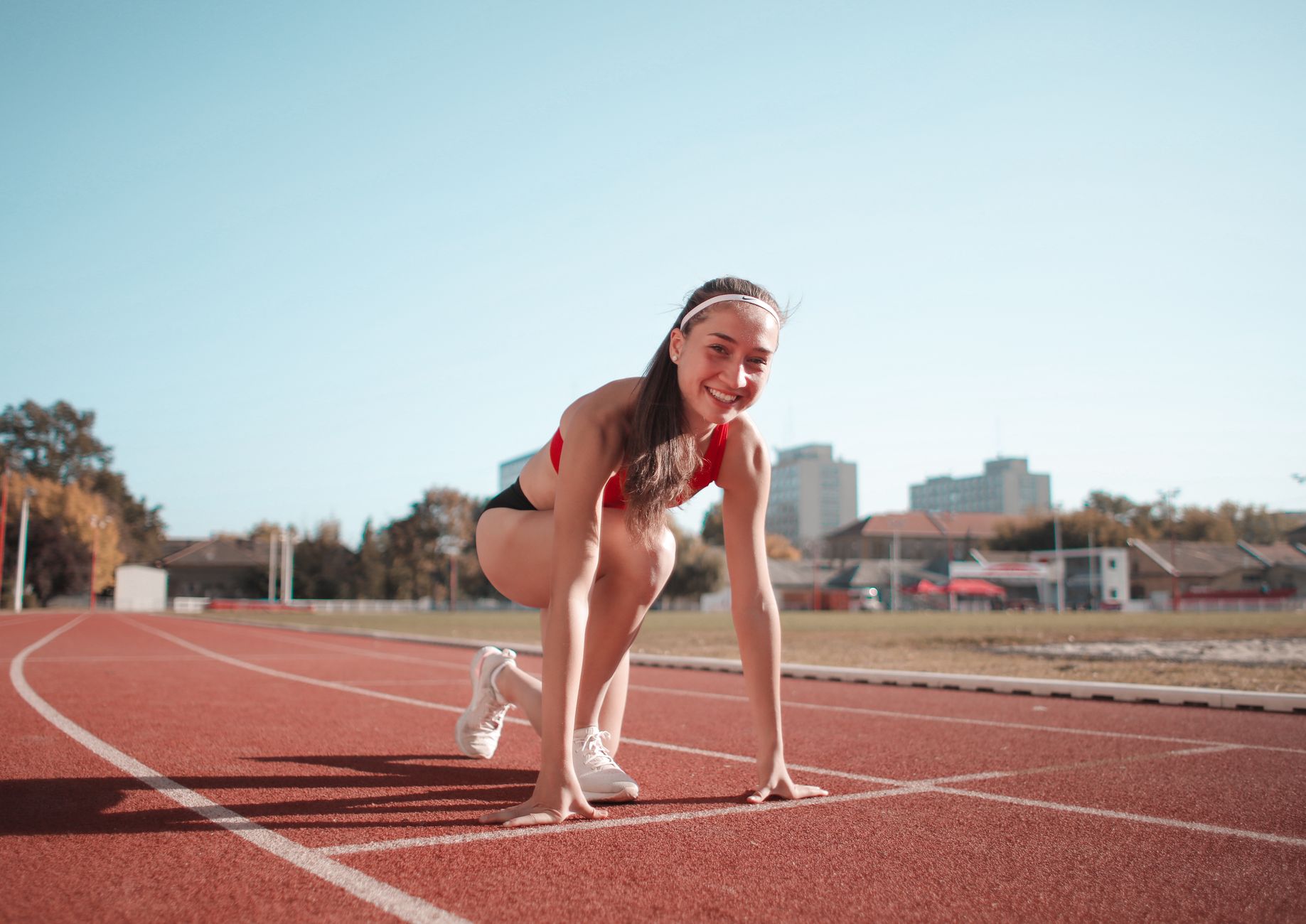
Managing Competitive Stress as an Athlete: Evidence-Based Wins
Competitive stress is not a sign that you are weak, unprepared, or mentally fragile. It is your nervous system reacting to stakes, uncertainty, and the demand to execute when the result matters.
What separates elite performers is not the absence of pressure. It is the ability to turn pressure into focus, timing, and aggression instead of tightness, hesitation, and panic.
For athletes, coaches, and serious clients, managing competitive stress is a trainable performance skill. The research is clear: arousal can help or hurt depending on how you interpret it, how prepared your body is, and whether your routine gives your brain something controllable to do. That means athlete anxiety should not be treated like a mystery. It should be treated like programming: assess the problem, apply the right dose, and repeat what works.
This guide gives you practical stress management tools you can use today: breathing protocols, pre-event routines, self-talk systems, sleep and caffeine rules, post-competition recovery, and coaching cues that reduce threat perception. If you perform in powerlifting, team sports, combat sports, endurance events, or high-pressure tryouts, these are the systems that keep nerves from hijacking execution.
What Competitive Stress Does to Performance
Challenge vs. threat changes your output
Competitive stress is not automatically bad. Performance often improves when arousal rises to a moderate level, especially for explosive effort, reaction speed, and intent. The problem starts when the brain reads the event as a threat instead of a challenge. Threat appraisal narrows attention too aggressively, increases muscle tension, and pushes decision-making toward panic or passivity.
In practice, a sprinter who thinks, “I need to prove I belong,” often runs tighter than the athlete who thinks, “This is my chance to attack my first 30 meters.” Same body, same heart rate, different interpretation. Your first job is to label symptoms correctly: increased heart rate, sweaty palms, and butterflies often mean readiness, not danger.
Research in sport psychology consistently shows that athletes who interpret pressure as a challenge tend to show better attentional control, movement efficiency, and competitive execution than those who interpret it as threat.
Know your personal stress signature
Your response to pressure is individual. One athlete gets overamped and rushes. Another gets flat and passive. A powerlifter may lose bracing because breathing gets shallow, while a hockey player may overhandle the puck because attention shifts from scanning to tunnel vision.
Track your top three signs of poor competitive stress management for 2-3 weeks. Common markers include:
- Heart rate stays elevated long after warm-up
- Shoulders, jaw, or hands feel excessively tense
- You speed through your setup or routine
- You forget basic tactical cues
- You catastrophize small mistakes early
Once you know your pattern, your interventions get precise. If you rush, you need downregulation and pacing. If you go flat, you need stimulation, sharper cue words, and a more aggressive warm-up.
Stress Management Before Competition Starts 24 Hours Early

Use breathing that actually changes physiology
Breathing is useful only if it is specific. The goal before competition is usually not to become sleepy; it is to lower excessive sympathetic drive while keeping readiness high. The best starting protocol for most athletes is 2-3 minutes of extended-exhale breathing: inhale through the nose for 4 seconds, exhale for 6-8 seconds, repeat for 10-15 breaths.
If nerves spike suddenly, use 1-3 cycles of the physiological sigh: one inhale, a second shorter inhale on top, then a long full exhale. This is fast, discreet, and effective when done in the call room, locker room, or just before an attempt. If you need more structured prep, read how to build a pre-game routine and test your breathing sequence in training first.
Build a 10-minute pre-event routine you can repeat
A good routine reduces decision fatigue. The brain under pressure loves predictability, so give it a script. Ten minutes before performance, use the same order every time: breathing, equipment check, one technical cue, one aggression cue, one rehearsal rep or visualization, then go.
A simple template looks like this:
- Minute 10-8: extended-exhale breathing
- Minute 8-6: gear and environment check
- Minute 6-4: 2 visualization reps from first-person view
- Minute 4-2: repeat 1 technical cue and 1 intent cue
- Minute 2-0: commit and execute without adding new thoughts
For a lifter, the cues might be “brace” and “drive.” For a basketball player, “eyes up” and “attack.” The trick is limiting yourself to one technical and one emotional cue. More than that usually creates clutter, not clarity.
Reduce Athlete Anxiety by Controlling Attention
Label thoughts instead of fighting them
Trying to force confidence usually backfires. A better approach is cognitive defusion: notice the thought, label it, then return to task. Instead of “I cannot miss this,” say, “I am having the thought that I cannot miss this.” That small change creates distance and lowers the emotional charge.
This is especially effective for athletes with recurring pre-competition worries. A goalkeeper thinking about letting in an early goal, or a lifter thinking about bombing out, does not need a perfect mindset. They need a way to stop feeding the loop. Label, breathe once, and redirect to the next action.
Use process goals and cue words under pressure
Outcome goals increase pressure because they focus on things you do not fully control: winning, qualifying, making the team, hitting a PR. Process goals anchor attention to what drives the outcome. Before the event, write down three controllables only. Example: “own my start,” “breathe between points,” “reset after errors within 5 seconds.”
Pair each process goal with a cue word. Research on self-talk shows consistent benefits for strength, endurance, and skilled execution when cueing is brief and practiced. Good cues are short, physical, and familiar: “tall,” “fast,” “punch,” “finish,” “snap.” For more mental performance systems, visit Peak’s guide to mental skills training under pressure.
Meta-analytic research on self-talk shows small-to-moderate performance benefits, with the biggest gains coming when cue words are practiced in training rather than invented on game day.
Use Sleep, Fuel, and Caffeine to Lower the Stress Load
Sleep is a performance multiplier, not a luxury
Competitive stress feels worse when sleep debt is already high. One poor night before a major event is common, but chronic under-sleeping raises baseline irritability, slows reaction time, and makes emotional control harder. Adults should aim for 7.5-9 hours; adolescent athletes often need 8-10 hours.
The night before competition, do not chase perfect sleep. Chase better conditions: finish your last hard training session early, stop caffeine at least 8 hours before bed, dim screens 60 minutes before sleep, and use a simple brain dump for 5 minutes to get worries out of your head. If recovery is already lagging, review recovery strategies for athletes and track your trends instead of obsessing over one night.
Fuel for stable energy, then dose caffeine carefully
Under-fueled athletes interpret stress more negatively because the body is already fighting low energy availability. For events lasting longer than a few minutes or involving repeated bouts, eat 1-4 g/kg of carbohydrate in the 1-4 hours before competition based on comfort and timing. Add a normal protein feeding, usually around 0.25-0.4 g/kg, if it sits well.
Caffeine can help, but it can also amplify athlete anxiety. Most athletes do well with 1.5-3 mg/kg taken 45-60 minutes pre-event. Start low if you are already high-strung. A 90 kg athlete might trial 135-270 mg in training first, not at a championship. For a deeper performance nutrition framework, see sports nutrition for performance and Peak’s article on heart rate variability for athletes to connect fuel, recovery, and stress readiness.
Recover Fast So Competitive Stress Does Not Become Chronic
Use a 15-minute downshift after the event
The competition is over, but your nervous system may still be acting like it is on stage. This is where many athletes miss easy gains. A 10-15 minute downshift helps lower residual stress hormones and starts recovery sooner. Do it whether the performance was great or terrible.
Use this sequence immediately after competing:
- 5 minutes easy walking or light cyclical movement
- 2-3 minutes extended-exhale breathing
- 500-750 mL fluid plus electrolytes if sweat loss was high
- 20-40 g protein within 1-2 hours
- Write one win and one fix, then stop reviewing
This prevents the common mistake of reliving every error while your system is still highly activated.
Run a 24-hour review, not an emotional replay
Do not evaluate your entire identity in the car ride home. High emotion creates bad analysis. Instead, wait until arousal drops, then review the event within 24 hours using four questions: What was the plan? What happened? What controlled variables helped? What will I change next session?
A real example: a volleyball player who says, “I choked on serve receive,” learns nothing. A useful review is, “I rushed my breath after two errors, stopped using my feet cue, and let one mistake become three.” That gives you a correction. If breathing and recovery are weak points, study breathing techniques for athletes and build the fix into practice.
Coach’s Playbook for Athlete Anxiety and Team Pressure
Use language that lowers threat and sharpens intent
Coaches heavily influence how athletes appraise pressure. Threat-based language sounds like, “Do not mess this up,” “We have to win,” or “Everyone is watching.” Challenge-based language sounds like, “Trust your first read,” “Own the next rep,” or “Do your job with speed.” The second style narrows focus to action.
In high-pressure moments, keep communication short. One cue, one tone, one job. If an athlete is spiraling, do not give a technical speech. Use a reset script: “Breathe. Eyes here. Next task.” Coaches who can regulate themselves first usually regulate athletes better.
Monitor stress like you monitor training load
Stress management gets real when you measure it. Use a daily 1-5 check-in for sleep quality, mood, soreness, and stress. Pair it with session RPE after hard practices. If stress is high for several days and performance markers are dropping, reduce volume, keep intensity targeted, and emphasize routine stability.
You can also track competition-week readiness with three quick questions: Did you sleep at least 7 hours? Are you eating normally? Are you using your routine? If two of three are off, intervention is needed. For coaches building better decision systems, ElitePTS publishes practical education at ElitePTS Articles that connects evidence to day-to-day coaching.
FAQ: Competitive Stress, Athlete Anxiety, and Stress Management
Is competitive stress normal for high-level athletes?
Yes. In fact, some level of competitive stress is expected when stakes are meaningful. The goal is not to eliminate arousal; the goal is to keep it in a range where attention, timing, and decision-making stay sharp.
If you never feel activated, you may actually be too flat. The key is learning whether you need to turn the dial down or up, then using the same tools consistently in training and competition.
How do I calm down right before competition?
Start with physiology, not positive thinking. Use 2-3 minutes of 4-second inhale and 6-8-second exhale breathing, then narrow your attention to one technical cue and one effort cue.
Avoid checking your phone, adding new strategy, or talking to people who spike your emotions. Your final minutes should be boring, repeatable, and focused on execution.
Can caffeine make athlete anxiety worse?
Absolutely. Caffeine improves alertness and can enhance performance, but higher doses can increase jitters, GI discomfort, racing thoughts, and poor pacing in athletes who are already highly stimulated.
If you are prone to athlete anxiety, stay toward the lower end of evidence-based dosing, usually 1.5-3 mg/kg, and always test it in training before trusting it on competition day.
What should I do if stress ruins my sleep before a big event?
First, do not panic over one rough night. Most athletes can still perform well with mild short-term sleep disruption, especially if the previous week was solid. The bigger risk is turning one bad night into a mental spiral.
Use a wind-down routine, cut caffeine earlier, keep meal timing consistent, and rest physically even if sleep is imperfect. The next day, lean harder on your routine, fueling, and breathing instead of obsessing over the missed hours.
Conclusion: Turn Competitive Stress Into an Edge
Competitive stress will always be part of sport. The athletes who thrive are not calmer by accident; they are more prepared on purpose. They understand their stress signature, use breathing to control state, rely on process goals instead of emotional guesswork, and protect sleep, fuel, and recovery so pressure does not stack on top of fatigue.
If you are serious about better performance, treat stress management like any other training variable: plan it, practice it, and review it. Build your pre-event routine, set your cue words, test your caffeine dose, and use a 24-hour review instead of emotional self-criticism. That is how you reduce athlete anxiety without losing competitive edge.
For more evidence-based coaching tools, performance education, and practical systems you can apply immediately, explore ElitePTS.com/articles. Turn pressure into precision, and let your mindset produce measurable gains.