



Science-Backed Strategies for ACL Tear Prevention
An ACL tear rarely happens because one rep was unlucky. It usually happens because speed, position, fatigue, and force all exposed a movement problem the athlete had not trained well enough. If you care about ACL tear prevention, you need to build better braking, better strength, and better knee stabilization before the season exposes the gap.
Introduction
ACL tear prevention is one of the highest-value investments in modern athlete training. The anterior cruciate ligament is most commonly injured during non-contact actions like decelerating, landing from a jump, or cutting to change direction, especially when the athlete loses trunk control, lets the knee collapse inward, or cannot absorb force quickly enough. For coaches and clinicians, that means prevention is not about one magic exercise. It is about reducing risk across the entire chain: mechanics, eccentric strength, single-leg control, fatigue resistance, and program consistency.
Research on neuromuscular warm-ups and multicomponent prevention programs is encouraging. Teams that consistently perform evidence-based jumping, strengthening, balance, and cutting drills often see meaningful reductions in ACL and lower-extremity injury rates. The key word is consistently. A great program done once a week will not beat a good program done three times every week for months. This guide breaks down what actually works for knee injury prevention, with practical protocols you can start today.
Why ACL Injuries Happen During Sport
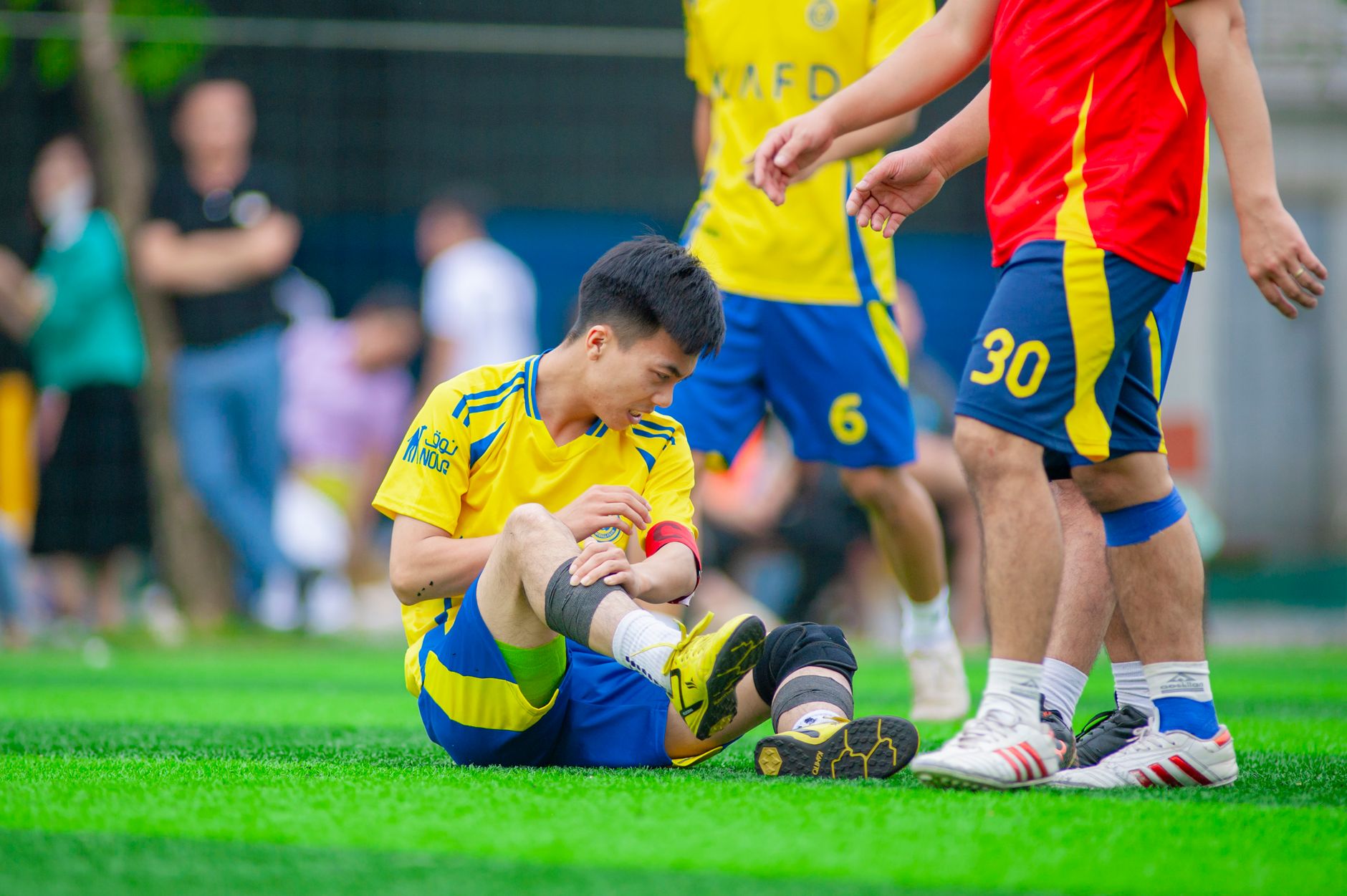
Deceleration is usually the real test
Most ACL injuries do not occur when athletes are simply running fast. They happen when athletes must slow down, plant, and redirect. In those split seconds, high ground-reaction forces combine with trunk sway, hip internal rotation, tibial rotation, and knee valgus. If the athlete cannot control the pelvis and torso, the knee often becomes the joint that pays the price.
That is why great prevention programs teach braking mechanics, not just jumping form. A basketball guard stopping for a crossover or a soccer winger planting to cut must learn to reduce speed with the hips and trunk, not by dumping force into a stiff, poorly aligned knee. Coaches should treat deceleration like a skill, not a side effect of conditioning.
Modifiable risk factors matter more than generic stretching
The most useful risk factors are the ones you can change. Poor hamstring eccentric strength, weak glutes, limited single-leg control, delayed trunk stiffness, asymmetries after previous injury, and fatigue-related movement breakdown all raise risk more than a random lack of flexibility. Static stretching alone does not solve those problems.
Start by screening what shows up in sport: single-leg squat quality, drop landing position, split squat strength, hamstring eccentric capacity, ankle dorsiflexion, and side-to-side hop control. If the athlete collapses medially, overstrides into cuts, or loses balance on one leg, you already have targets for smarter knee injury prevention.
Meta-analyses on neuromuscular injury-prevention programs consistently show meaningful reductions in ACL and lower-body injuries, with the biggest benefits seen when athletes complete the program at least 2 to 3 times per week.
Movement Skills That Drive ACL Tear Prevention
Own the landing before you chase bigger jumps
Landing mechanics are a cornerstone of ACL tear prevention. Athletes should land with the knees tracking over the mid-foot, the hips back, the trunk stacked, and enough flexion to absorb force without collapsing. The goal is not to land softly like a feather; it is to land quietly and in control, then be ready to reaccelerate.
A simple progression works well: snap-downs, drop landings, stick landings, then repeated jump-land-reset drills. Use 2 to 3 sets of 4 to 6 quality reps. Film from the front and side. If the knee caves in, reduce height and regain control. For more explosive progressions, coaches can pair this work with plyometric training for power and resilience.
Teach cutting from the trunk down
Cutting mechanics improve fastest when athletes get external cues. Tell them to lower their center of mass before the plant, keep the chest over the knee, and push the ground away rather than reaching far outside the base of support. Overreaching creates long braking distances and worse knee positions.
Use 45-degree planned cuts first, then 90-degree cuts, then reactive mirror drills. A practical setup is 3 sets of 3 reps each side at submaximal speed, progressing to 4 sets of 4 at game speed. When athletes can align trunk, hip, knee, and foot under pressure, you are building real knee stabilization, not just rehearsing cones.
Strength Training That Protects the Knee
Posterior-chain strength is non-negotiable
The hamstrings oppose anterior tibial translation and help unload the ACL, especially during sprinting, landing, and cutting. That makes eccentric hamstring strength one of the best returns on investment in athlete training. Nordic hamstring curls, Romanian deadlifts, and hip-dominant split squats should be staples, not extras.
Use 2 sessions per week. A strong template is Nordics for 2 to 4 sets of 4 to 6 reps, RDLs for 3 to 4 sets of 6 to 8, and barbell or dumbbell hip thrusts for 3 sets of 6 to 10. If an athlete lacks hamstring capacity, build it progressively. This pairs well with hamstring strength for sprint performance, because resilient athletes are usually faster athletes too.
Single-leg strength cleans up force leaks
Many athletes squat well bilaterally yet fall apart on one leg. Since most ACL injuries happen in single-leg or split-stance positions, unilateral strength matters. Rear-foot-elevated split squats, step-downs, lateral lunges, and single-leg RDLs expose control deficits that bilateral lifts can hide.
A practical lower-body block for knee injury prevention is:
- Rear-foot-elevated split squat: 3 to 4 sets of 5 to 8 each side
- Single-leg RDL: 3 sets of 6 to 8 each side
- Lateral step-down: 2 to 3 sets of 8 each side with slow tempo
- Copenhagen plank: 2 to 3 sets of 20 to 30 seconds each side
The hack here is tempo. Use a 3-second lowering phase on split squats and step-downs. Slow eccentrics reveal poor alignment fast and build the frontal-plane control athletes need when the game speeds up.
Warm-Ups and Plyometrics That Actually Reduce Risk
The 12 to 15 minute warm-up that works
Evidence-based protocols like FIFA 11+ and PEP work because they combine the right ingredients: running mechanics, balance, strength, landing, and controlled change of direction. They are short enough to use consistently and specific enough to change movement quality over time.
A simple pre-practice sequence looks like this:
- 2 minutes of skips, shuffles, and controlled acceleration buildups
- 2 sets of 10 walking lunges and 10 single-leg calf raises
- 2 sets of 20-second single-leg balance with reaches
- 2 sets of 5 snap-downs and 5 stick landings
- 3 reps each side of submaximal decel-to-cut drills
Done 3 times per week, this is enough to meaningfully improve mechanics. Athletes who need more tissue capacity can combine it with how to build bulletproof knees style accessory work after training.
Progress from planned drills to reactive chaos
Too many programs stop at pretty landings in a controlled space. Sport is reactive, so prevention must eventually become reactive too. After 2 to 4 weeks of controlled drills, add visual or verbal cues, partner pressure, and unpredictable direction changes while maintaining the same technical standards.
Try a three-phase model: weeks 1 to 2 planned land and cut drills, weeks 3 to 4 acceleration-deceleration patterns with time pressure, weeks 5 and beyond reactive mirror or color-call drills. Keep plyometric contacts moderate, around 20 to 40 quality contacts per session, and stop the set when landing mechanics degrade.
Fatigue, Load Management, and Recovery
Fatigue changes mechanics before athletes notice it
Late in sessions, athletes often show more trunk sway, slower ground contacts, worse knee alignment, and poorer braking angles. They may still feel “fine,” but the movement quality says otherwise. This is where smart coaches separate conditioning from skill decay and stop confusing exhaustion with productive training.
Track simple markers: jump height drop-off, landing video quality, session RPE, hamstring soreness, and weekly sprint volume. If cutting mechanics worsen after the fourth block, place high-skill deceleration work earlier in the session. For programming help, coaches should review load management for athletes and stop stacking max COD work on already fatigued legs.
Recovery habits make prevention durable
Recovery is not soft. It is what allows the athlete to express good mechanics tomorrow. Sleep below 7 hours per night, underfueling, and repeated hard sessions without restoration all increase the odds of movement breakdown. Basic targets are 8 to 9 hours of sleep, daily protein around 1.6 to 2.2 g/kg, and adequate carbohydrate around intense field or court sessions.
One underrated hack is to place high-speed cutting sessions on days when the athlete is freshest, then use lower-neural accessory work later in the week. Recovery education matters too. Point athletes toward resources like sleep and recovery for athletic performance so prevention is supported outside the weight room.
Screening and Program Design for High-Risk Athletes
A useful 10-minute screening battery
You do not need a biomechanics lab to catch common red flags. In 10 minutes, coaches can learn a lot from a bodyweight single-leg squat, a drop jump filmed from the front, a single-leg hop-and-stick, and a quick ankle dorsiflexion check. Look for valgus collapse, trunk drift, foot instability, and asymmetry in force acceptance.
Add one strength marker and one endurance marker. A split squat for reps at a fixed load and an isometric hamstring bridge hold work well in the field. If one side repeatedly fails earlier or movement quality changes fast, adjust training volume, reduce chaos, and build capacity before exposing the athlete to maximal reactive drills.
Who needs extra ACL attention
Adolescent athletes, athletes in pivoting sports, those with previous knee injury, and female athletes in jumping and cutting sports often need a more deliberate prevention plan. That does not mean fear-based training. It means more coaching on deceleration, more unilateral strength, and stricter adherence to warm-up quality.
Best practice is to build the biggest dosage in the off-season and pre-season, then maintain it in-season with 2 shorter exposures each week. If time is tight, keep the essentials: one structured neuromuscular warm-up, one eccentric hamstring exposure, and one unilateral strength exposure weekly. Consistency beats complexity every time.
FAQ: Practical Questions About ACL Tear Prevention
Can ACL tears really be prevented?
No program can reduce risk to zero, because sport is chaotic and contact injuries still happen. But strong evidence shows that multicomponent neuromuscular programs can significantly lower ACL and lower-extremity injury risk when athletes do them consistently and with good coaching.
The practical takeaway is simple: prevention is probabilistic, not guaranteed. Improve strength, landing, cutting, and fatigue resistance, and you shift the odds in your favor. That is exactly how serious knee injury prevention should be viewed.
How many days per week should athletes do prevention work?
For most field and court athletes, 2 to 3 weekly exposures is the sweet spot. One short neuromuscular warm-up before practice plus one or two strength-based sessions usually gives enough volume to change movement quality without creating excess fatigue.
In-season, keep it efficient: 10 to 15 minutes before practice and 15 to 25 minutes of targeted strength after or on separate lift days. Off-season is when you can push adaptation harder with more plyometric and eccentric strength progressions.
Are knee braces useful for ACL tear prevention?
Braces can provide confidence and may be useful in certain clinical contexts, but they are not a primary prevention strategy for healthy athletes. A brace does not replace neuromuscular control, deceleration skill, or hamstring strength.
If an athlete depends on a brace but still lands with valgus collapse or cuts with poor trunk control, the underlying problem remains. Use braces only when indicated, and keep the main focus on training the athlete, not outsourcing stability to equipment.
What are the best exercises for knee stabilization?
The best exercises are the ones that challenge alignment under load: split squats, single-leg RDLs, step-downs, Nordics, snap-downs, stick landings, and controlled cutting drills. Together, they train strength, eccentric braking, and positional awareness.
For most athletes, a high-value starter package is 3 sets each of split squats, single-leg RDLs, and step-downs twice weekly, plus landing and cutting practice 2 to 3 times weekly. That gives real transfer to sport-specific knee stabilization.
Conclusion
ACL tear prevention is not one drill, one band exercise, or one warm-up done once in August. It is a system: teach cleaner landings, coach better deceleration, build eccentric hamstrings, strengthen each leg independently, and protect movement quality when fatigue rises. When those pieces are repeated week after week, athletes move better under speed, pressure, and chaos. That is the standard for real knee injury prevention.
If you want more evidence-based coaching strategies that turn science into results, explore the latest resources at ElitePTS Articles. Elite Catalyst is built for athletes, clients, and coaches who want legitimate gains from smarter athlete training, not guesswork.